 Destinations
 Data sources
 AI insights
 About us
 Careers
 Security
 Customer reviews
 Contact us
 Affiliate program
 Solution partners
 Template gallery
 Looker Studio templates
 Power BI templates
 Excel templates
 Google Sheets templates
 Tableau templates
 Facebook Ads templates
 Google Ads templates
 Data fields & Metrics
 AI prompt library & Guides
 Product documentation
 API documentation
 Case studies
 Blog
Blog Data models
 Windsor vs Supermetrics
 Windsor vs Funnel.io
 Windsor vs Fivetran
 Windsor vs Rivery
 Windsor vs Portermetrics
 Windsor vs Coupler.io
Connect AdRoll to Snowflake
Quickly integrate your AdRoll data into Snowflake with Windsor.ai’s ETL connector.
Our platform automatically extracts and loads AdRoll campaign data into Snowflake, delivering clean, standardized tables ready for SQL analysis, long-term storage, and downstream reporting.
Forget CSVs. Stop copy/paste. Connect data in 2 minutes. No code required.
 Sign up with Google
 Free forever plan
No credit card needed
Free forever plan
No credit card needed










Scale your advertising analytics with AdRoll to Snowflake integration
Integrating AdRoll to Snowflake via Windsor.ai centralizes retargeting and prospecting performance data in a scalable analytics environment, offering the following benefits:

Automated data sync
Windsor.ai automatically extracts AdRoll data and normalizes it into consistent, structured tables before loading it into Snowflake. The data is immediately ready for SQL analysis and downstream BI use, without additional preparation.

Advanced SQL analysis
Run complex SQL queries to analyze spend, trends, efficiency metrics, and historical performance across large time ranges without platform limitations.

Cross-channel visibility
Combine AdRoll data with 350+ marketing, analytics, CRM, and revenue sources in Snowflake to centralize data storage and enable cross-channel analysis in a single warehouse environment.
Using Windsor.ai connector to import data from AdRoll into Snowflake
Most ways for connecting AdRoll to Snowflake are complex, time-consuming, and expensive. Windsor.ai removes that friction with a fast, cost-efficient, and fully no-code solution.
Our no-code ETL connector automatically syncs AdRoll data into Snowflake in minutes, eliminating the need for custom data pipelines, manual file transfers, or ongoing API maintenance.
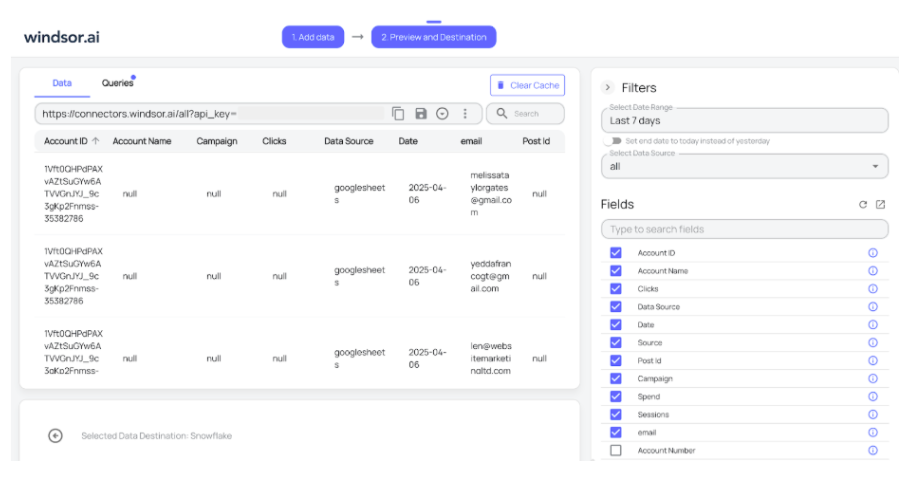














How to connect AdRoll to Snowflake in Windsor.ai
To set up the connector, make sure you have the following things in place:
- AdRoll account with the required permissions
- Configured Snowflake environment
- Active Windsor.ai account
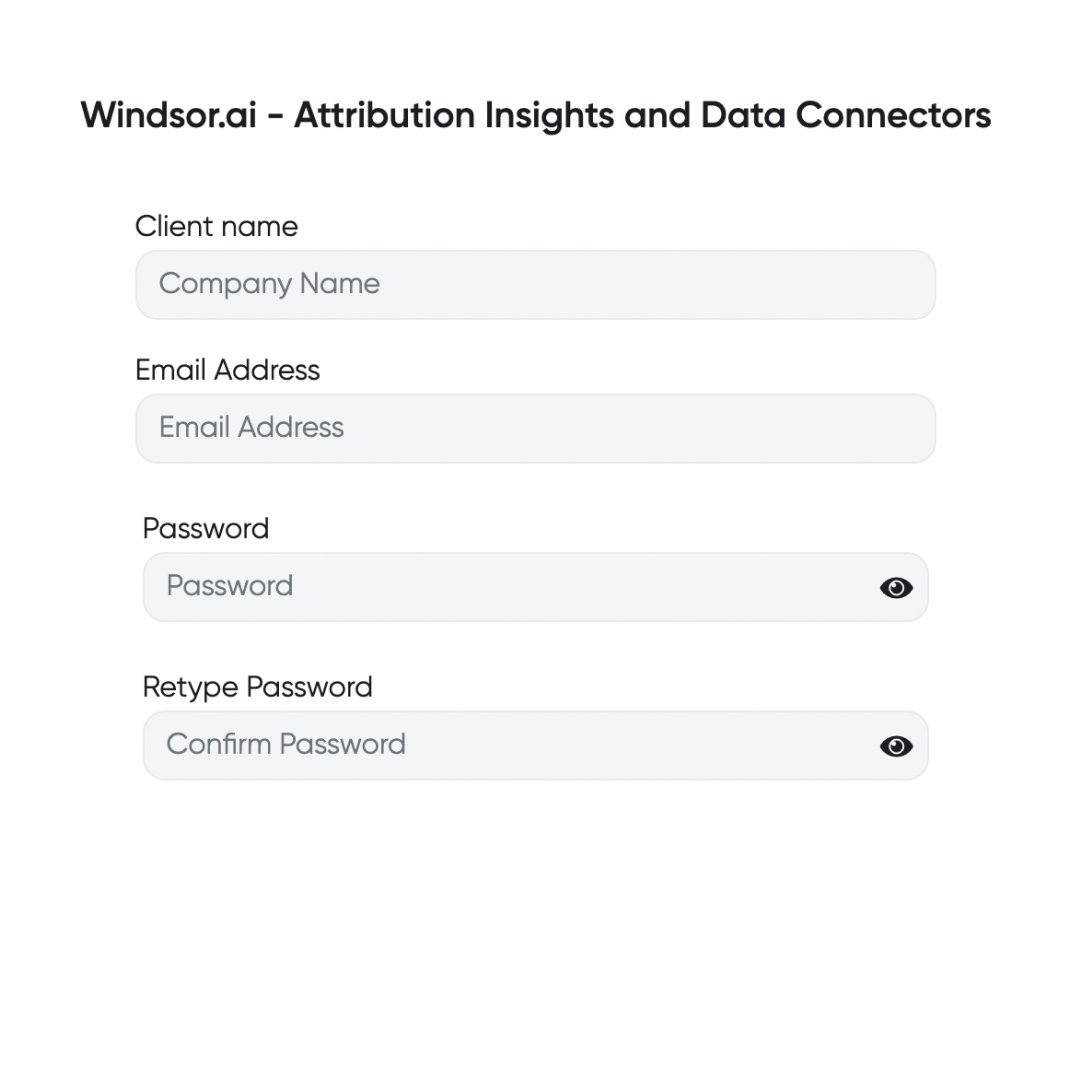
Register and log in to Windsor.ai
Create a new Windsor.ai account or log in if you already have one.
Prepare your Snowflake environment
Set up the database on the Snowflake side where you want to stream your data to, giving all the necessary permissions to Windsor.ai.

Connect a data source
In your Windsor.ai dashboard, connect AdRoll to Windsor.ai. Select the necessary account(s) you want to pull data from and click “Next.”

Set Snowflake as a data destination
In the preview and destination dashboard, select Snowflake and create a destination task. Enter all the essential details in the destination task table and save the task.

See the integrated data in Snowflake
Verify that your data is being added to the database by previewing the data table in your Snowflake account.

FAQs
What is Snowflake?
Snowflake is a cloud-native data warehouse designed for scalable data storage, processing, and analytics. It enables businesses to centralize and analyze large datasets efficiently using business intelligence tools. As a cloud-agnostic platform, Snowflake runs seamlessly on multiple cloud providers, including Amazon Web Services (AWS), Google Cloud, and Microsoft Azure, ensuring flexibility and high performance.
Do you have helpful links to get started with integrating AdRoll and Snowflake using Windsor.ai?
Yes, we have helpful resources to help you get started. You can explore our official documentation and tutorials for seamless AdRoll to Snowflake integration with Windsor.ai:
How much time do I need to create the AdRoll and Snowflake integration?
Windsor.ai provides a user-friendly interface and a powerful data connector that enables you to integrate AdRoll with Snowflake in under 5 minutes, making the process quick and hassle-free.
How much does it cost to integrate AdRoll into Snowflake with Windsor.ai?
Windsor.ai’s pricing for AdRoll into Snowflake integration can vary depending on your use case. We offer absolutely transparent, fixed pricing plans for diversified business needs and budgets, starting at just $19/month, with a free forever plan available and no credit card required.
Tired of manual AdRoll data exports? Get started with Windsor.ai today to automate your reporting


