 Destinations
 Data sources
 AI insights
 About us
 Careers
 Security
 Customer reviews
 Contact us
 Affiliate program
 Solution partners
 Template gallery
 Looker Studio templates
 Power BI templates
 Excel templates
 Google Sheets templates
 Tableau templates
 Facebook Ads templates
 Google Ads templates
 Data fields & Metrics
 AI prompt library & Guides
 Product documentation
 API documentation
 Case studies
 Blog
Blog Data models
 Windsor vs Supermetrics
 Windsor vs Funnel.io
 Windsor vs Fivetran
 Windsor vs Rivery
 Windsor vs Portermetrics
 Windsor vs Coupler.io
 Last updated: 1 September 2026




In modern marketing operations, the core challenge is no longer a lack of data, but its fragmentation.
Customer insights are scattered across dozens of siloed data sources, such as CRMs, ad platforms, analytics tools, and more, hindering the unified view required to drive effective strategy.
To solve this, two primary architectural techniques for data integration have emerged: the traditional ETL process and the agile approach of data virtualization.
Understanding the data virtualization vs ETL debate is critical for any marketing leader. This guide provides a definitive framework for this decision, clarifying when each method is optimal and why, sometimes, for the sake of speed and agility, “skipping the load” is the most strategic choice you can make.
Highlights
- The primary function of the ETL process is to physically move and transform data to create a stable, persistent enterprise data warehouse optimized for deep, historical analysis
- Data virtualization provides a unified, logical view of data from multiple sources in real time, enabling immediate insights without the latency of data replication
- Use ETL for complex data quality initiatives and long-term trend analysis; use data virtualization for real-time campaign monitoring and agile, self-service analytics
- The optimal data strategy often combines both methods, using ETL for a robust data foundation and data virtualization for a flexible, real-time access layer
Foundational concepts: defining the data integration landscape
Let’s start with the difference between ETL and data virtualization.
Both ETL and data virtualization aim to provide a unified view of disparate data. However, their methods and underlying philosophies are fundamentally different.
The need for a coherent strategy is more pressing than ever, as a lot of organizations struggle to manage unstructured data.
The traditional workhorse: The ETL process (Extract – Transform – Load)
The ETL process is the bedrock of traditional business intelligence and enterprise data warehousing. The concept of ETL is a sequential, three-step process designed to create a highly structured and persistent physical repository of data.
- The Extract process pulls raw data from various source systems.
- Next, this data is moved to a dedicated staging area where the crucial data transformation occurs; this includes intensive data cleansing, standardization of domain values, defining consistent attribute definitions, and conforming the data to a predefined schema.
- Finally, this clean, structured data is loaded into a central data warehouse or data store, optimized for analysis and reporting.

The agile alternative: The concept of data virtualization
Data virtualization takes a fundamentally different approach.
Instead of physically moving data, it creates a logical data layer that provides a unified view of information in place, regardless of where it resides. It acts as an abstraction layer, creating a virtual data source for end-users.
When a user or a reporting tool queries this virtual layer, the data virtualization server translates that query in real time, sending it to the appropriate underlying data sources. It then aggregates the results and presents them back to the user as if they came from a single, cohesive database.
Data virtualization’s primary objective is to provide immediate, consistent access to information in real-time environments without the latency and complexity of physical data movement.
Data virtualization vs ETL: A comparative analysis for marketing operations
For marketing operations professionals, the choice between these two methods isn’t merely technical; it has profound implications for:
- Decision-making speed
- Strategic capability
- Campaign agility
The decision on data virtualization vs ETL must be weighed against the specific demands of the marketing function.
Data timeliness and the demand for real-time environments
The most significant differentiator is speed.
Anything that affects how fast your site loads or how long it takes you to access your data has a direct impact on marketing performance. A recent study from Semrush found that increasing page load times from three to five seconds can almost triple bounce rates.
Traditional ETL jobs are typically run in batches (e.g., nightly or hourly), which means the data in the data warehouse is always historical. This latency is acceptable for long-term trend analysis but is a significant handicap for in-flight campaign optimization.
Data virtualization, in contrast, queries data on demand, providing an up-to-the-minute view of performance, which is essential for acting on immediate customer signals.
Agility, implementation speed, and consumption requirements
The development lifecycle for ETL can be extensive. It requires defining schemas and specifications, building complex data pipelines, and performing initial historical loads. According to GeeksforGeeks, the process “can take several months or even years to complete.”
Any change to a source system or a new reporting requirement often necessitates a significant development effort.
Data virtualization offers greater agility. Setting up a new virtual data source is often a matter of hours, not weeks, empowering marketing teams to connect to new platforms or build ad-hoc reports without a lengthy IT project cycle. This dramatically accelerates time-to-value.
The depth of data transformation vs. on-the-fly processing
Here, traditional ETL has a distinct advantage.
The dedicated transformation step allows for robust, multi-pass data transformation and complex enrichment in a controlled environment. This is ideal for intensive data cleansing and creating a highly conformed, single version of the truth, which is critical for master data management.
While data virtualization can perform transformations, these happen on the fly.
Complex joins and calculations across large datasets can strain the underlying source systems and lead to slower query performance, making it less suitable for the deep, historical data restructuring at which ETL tools excel.
Infrastructure, cost, and the impact of cloud services
The total cost of ownership also differs significantly. The ETL process incurs costs for:
- The storage of both the final data warehouse and the intermediate staging areas
- The processing power required for transformation jobs.
This can be substantial, especially when dealing with Big Data.
Data virtualization has a much smaller storage footprint since it doesn’t replicate data. However, it can increase the query load on source systems, potentially requiring more powerful hardware or higher-tier cloud service plans for those systems.
For organizations operating in hybrid environments, data center colocation solutions can help balance these infrastructure demands. By colocating data sources, analytics platforms, and cloud on-ramps in the same facility, teams can reduce latency for virtualized queries while maintaining predictable costs and performance. This approach allows marketers to benefit from real-time data access without overloading transactional systems or fully committing to public cloud infrastructure.
⚙️ Modern, no-code data integration platforms like Windsor.ai, with its scalable ELT/ETL pipelines, provide significant value. The platform reduces the infrastructure overhead of traditional ETL tools while providing the speed and flexibility needed for agile marketing analytics.
Strategic use cases: When to employ each data integration approach
The optimal choice of data virtualization vs ETL depends entirely on the specific business objective and the nature of the analytical task at hand.
When the ETL process is the optimal choice for your enterprise data warehouse
The disciplined, structured approach of ETL remains the superior choice in several key scenarios:
Scenario 1: Historical reporting and trend analysis
ETL is unmatched for building long-term strategic analyses, such as quarterly business reviews or multi-year trend analyses. It creates a stable, historically accurate, and high-performance repository that is purpose-built for this type of deep analytics.
Scenario 2: Complex data quality and master data management
When data from disparate systems must be rigorously cleansed, de-duplicated, standardized, and conformed to create a single, golden customer record, the dedicated transformation stage in ETL is essential.
Scenario 3: Reducing load on transactional systems
If your operational systems (like your CRM or e-commerce platform) cannot handle the performance impact of direct, frequent analytical queries, ETL is the solution. It offloads that burden by creating a separate copy of the data for optimized asynchronous transformation.
When to skip the load
The agility and real-time nature of data virtualization make it the ideal choice for a different set of marketing challenges.
Scenario 1: Agile BI and self-service analytics
Data virtualization empowers marketing teams to quickly connect to new data sources, like a new social media platform or a specific web service API, and build reports without waiting for IT to engineer a full pipeline.
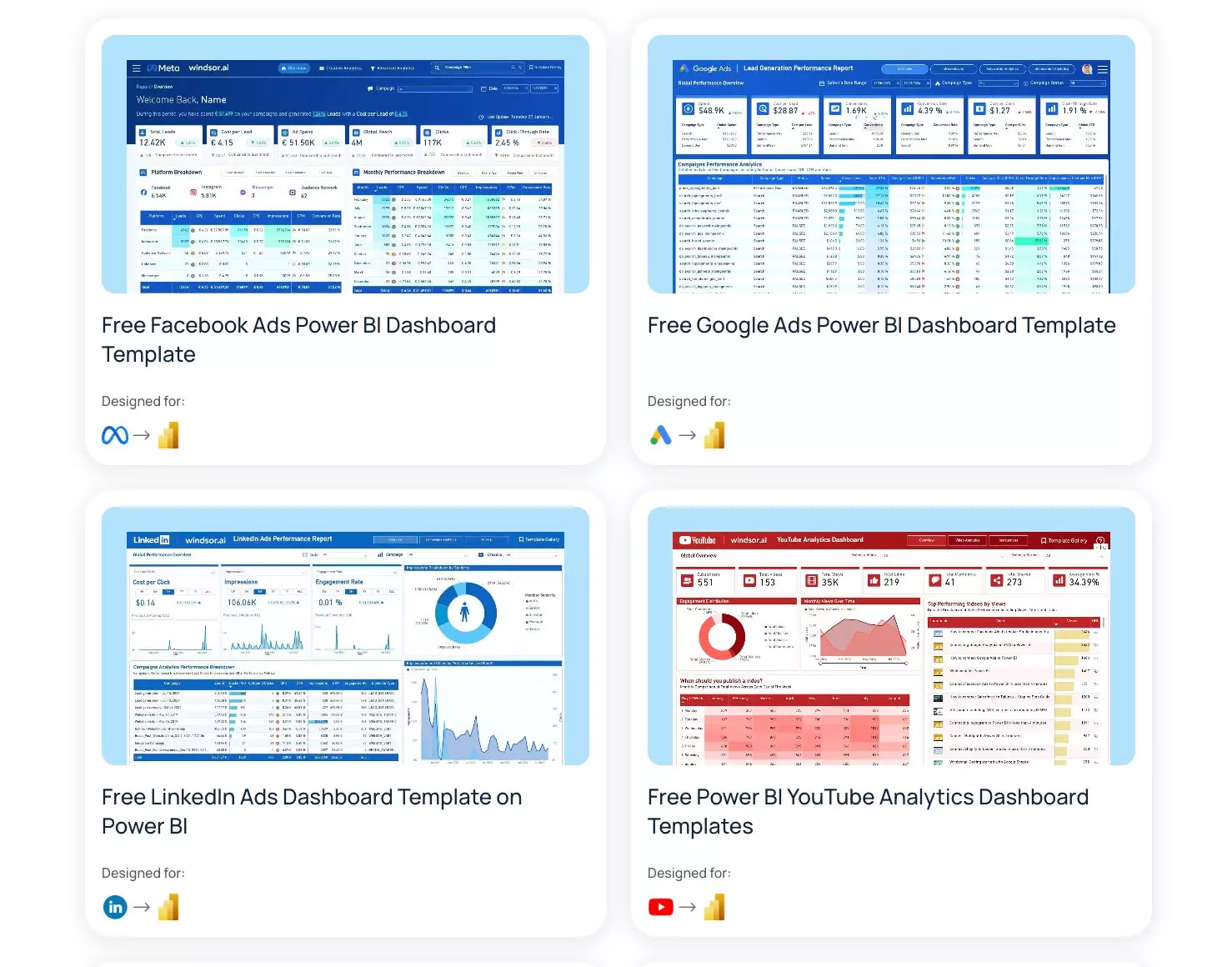
🔗 Windsor.ai streamlines data integration into the most popular BI tools (Looker Studio, Power BI, Tableau) with its extensive library of pre-built connectors for marketing sources.
Scenario 2: Real-time campaign monitoring
Data virtualization is the only option for a marketing manager who needs an up-to-the-minute view of campaign performance. It allows them to query ad platforms, call center systems, and web analytics directly, making immediate, data-driven adjustments to optimize spend and performance.
Scenario 3: Powering operational applications
When an internal tool or a customer-facing portal needs to display a unified view of live data from multiple systems, for example, showing a customer’s order history alongside their recent support tickets, data virtualization provides the required real-time data federation.
The impact on lifecycle marketing and real-time personalization
Modern marketing strategies increasingly depend on immediate data access to be effective.
To maximize either ETL or data virtualization, marketers should consider how data accessibility impacts campaign timing. For example, lifecycle marketing depends on timely, personalized messaging at each stage of the customer journey.
Delays in data movement can hinder this, which is why skipping the load process through data virtualization can give teams the agility they need to act on real-time signals and behavioral insights.
The hybrid approach: Achieving synergy between architectural techniques
Ultimately, the most sophisticated organizations recognize that the data virtualization vs ETL discussion is not a binary choice. The optimal data architecture often involves using both methodologies in a complementary, hybrid approach to serve different business processes.
Leveraging a hybrid cloud environment for maximum flexibility
A powerful modern architecture uses ETL or ELT to build a robust, historical enterprise data warehousing foundation. This foundation serves as the single source of truth for deep analytics.
Layered on top of this, data virtualization provides an agile data access and delivery service.
The critical role of data governance and metadata management
A hybrid cloud environment requires a strong, unified data governance framework.
It’s crucial to have centralized metadata management to catalog all data sources, whether physical or virtual. This ensures that business users have a consistent understanding of data definitions and lineage, while centralized security policies and user permissions guarantee that data is accessed consistently and securely.
Endpoint privilege management further strengthens this model by ensuring that marketers, analysts, and engineers have only the minimum permissions required on their devices when accessing ETL pipelines, virtualized data layers, or cloud consoles. By limiting endpoint-level standing admin rights, organizations reduce the risk that compromised credentials or misused tools can expose sensitive marketing data.
Conclusion
The choice between ETL and data virtualization is a strategic decision that hinges on your specific consumption requirements.
There is no single right answer; the optimal path balances the need for deep historical transformation with the demand for real-time agility. By understanding the core strengths and weaknesses of each approach, marketing operations leaders can design a data integration architecture that is purpose-built to drive efficiency and provide a tangible competitive advantage.
🚀 If you need to build a powerful data integration strategy for ETL/ELT pipelines, try Windsor.ai‘s free plan and accelerate your time-to-insight.


