 Destinations
 Data sources
 AI insights
 About us
 Careers
 Security
 Customer reviews
 Contact us
 Affiliate program
 Solution partners
 Template gallery
 Looker Studio templates
 Power BI templates
 Excel templates
 Google Sheets templates
 Tableau templates
 Facebook Ads templates
 Google Ads templates
 Data fields & Metrics
 AI prompt library & Guides
 Product documentation
 API documentation
 Case studies
 Blog
Blog Data models
 Windsor vs Supermetrics
 Windsor vs Funnel.io
 Windsor vs Fivetran
 Windsor vs Rivery
 Windsor vs Portermetrics
 Windsor vs Coupler.io
 Last updated: 31 August 2026




The fastest way to connect GitHub to ChatGPT is to install Windsor’s native ChatGPT app and link your GitHub account through Windsor.ai, a two-step process that takes under a minute and needs no code.
Without it, engineering and DevOps teams tracking repository activity, issue backlogs, or contributor output are left pulling data from the GitHub API by hand or building custom scripts to get it into a spreadsheet. Connecting GitHub to Windsor.ai gives ChatGPT direct, live access to repository, issue, pull request, and contributor activity data, so you can ask questions about your codebase and team output in plain language instead of writing queries against the GitHub API.
2 steps to connect GitHub to ChatGPT
Takes under a minute, no code or manual API scripting required.
For the full walkthrough, see Windsor’s documentation on integrating data into ChatGPT.

Prerequisites
- A Windsor.ai account (free forever plan, no credit card, or a paid plan starting at $19/month)
- A GitHub account with at least one repository or organization you have access to
- A ChatGPT account that supports installing apps
Step 1. Connect GitHub to Windsor.ai
- Create a free account at onboard.windsor.ai/app/github
- Select GitHub from the list of data sources
- Authorize Windsor.ai to access your GitHub account or organization
- Connect additional repositories or organizations if you manage more than one
Step 2. Connect the Windsor.ai app in ChatGPT
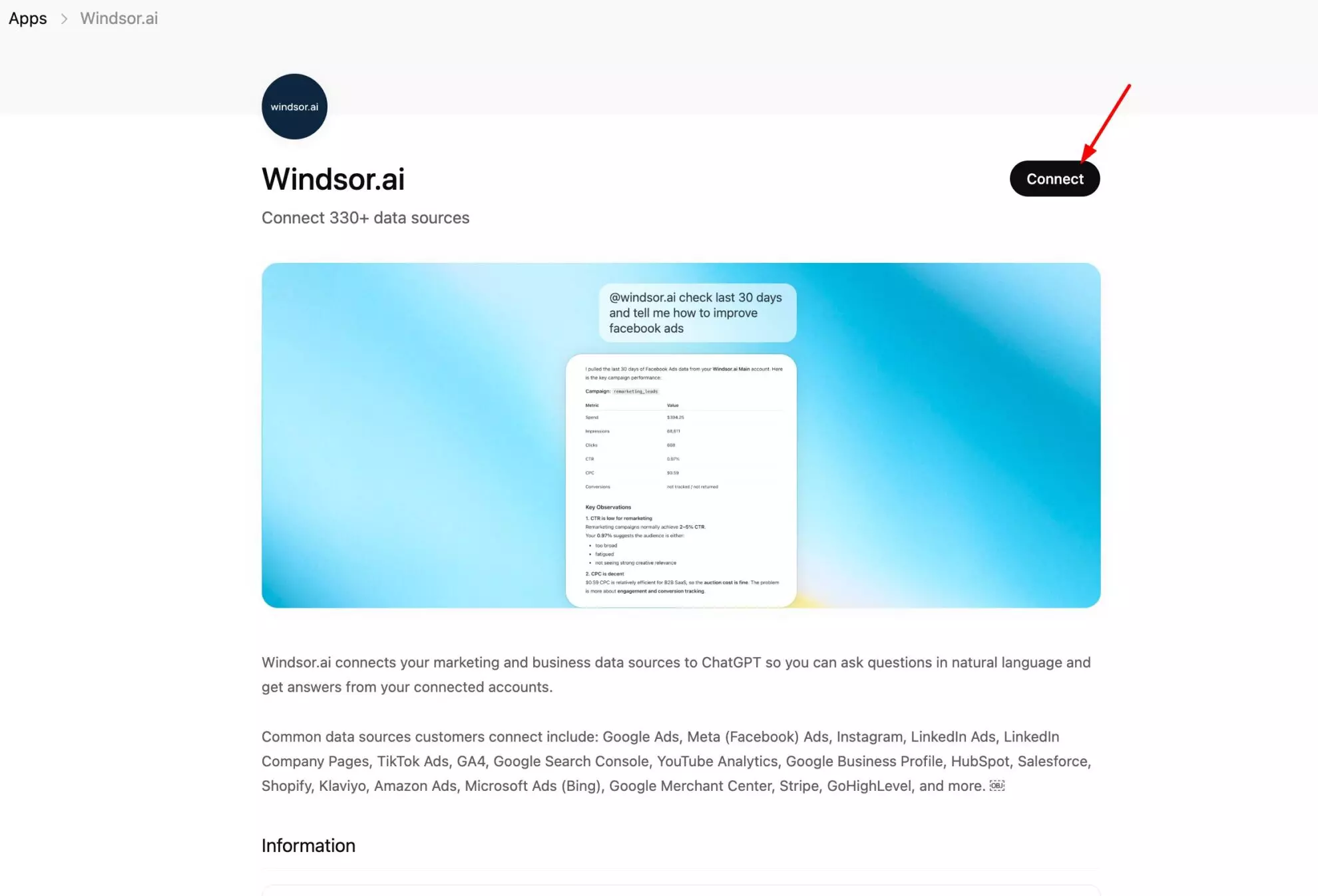
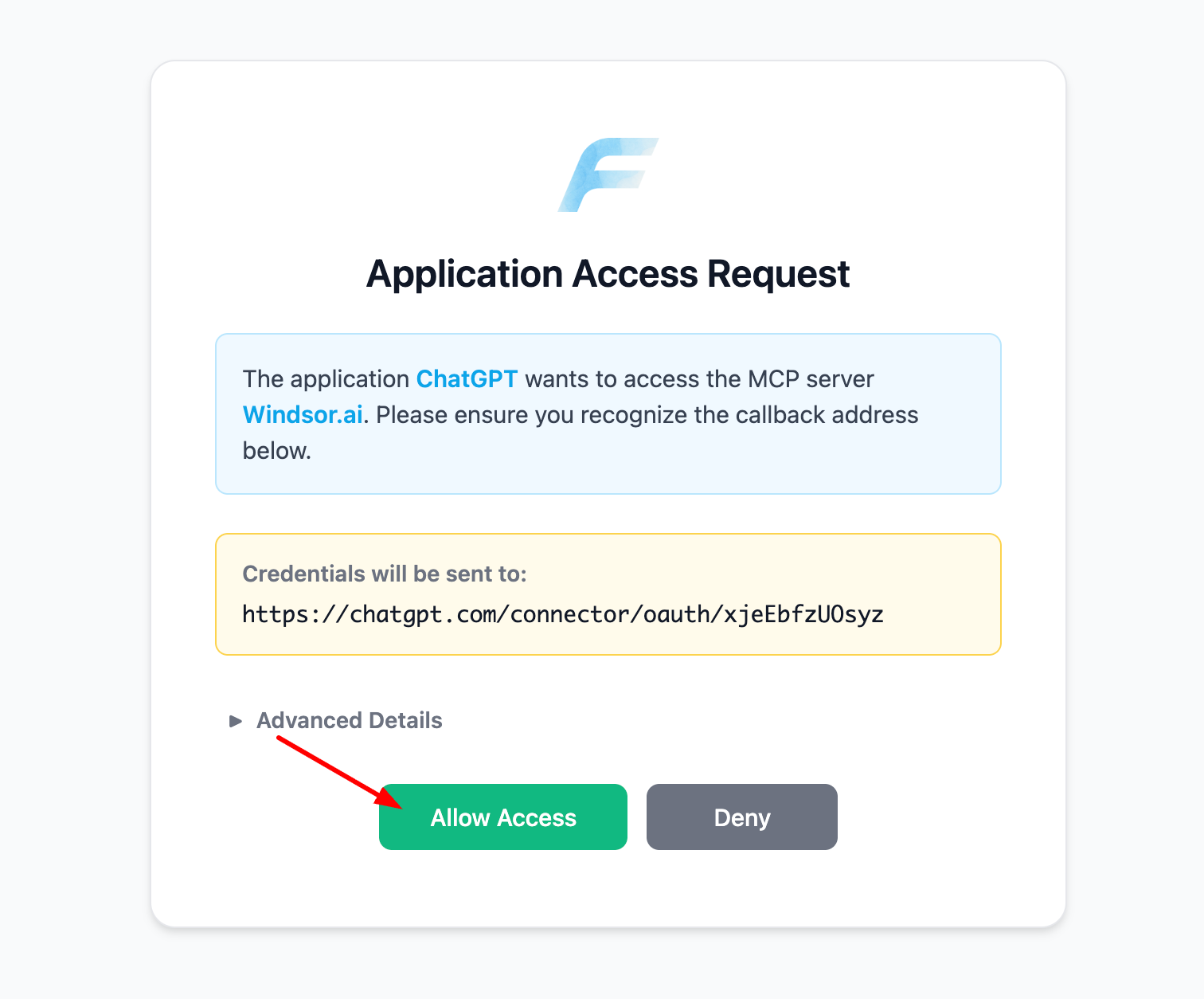
In ChatGPT, open the apps menu and install Windsor’s native app, then approve the requested permissions.
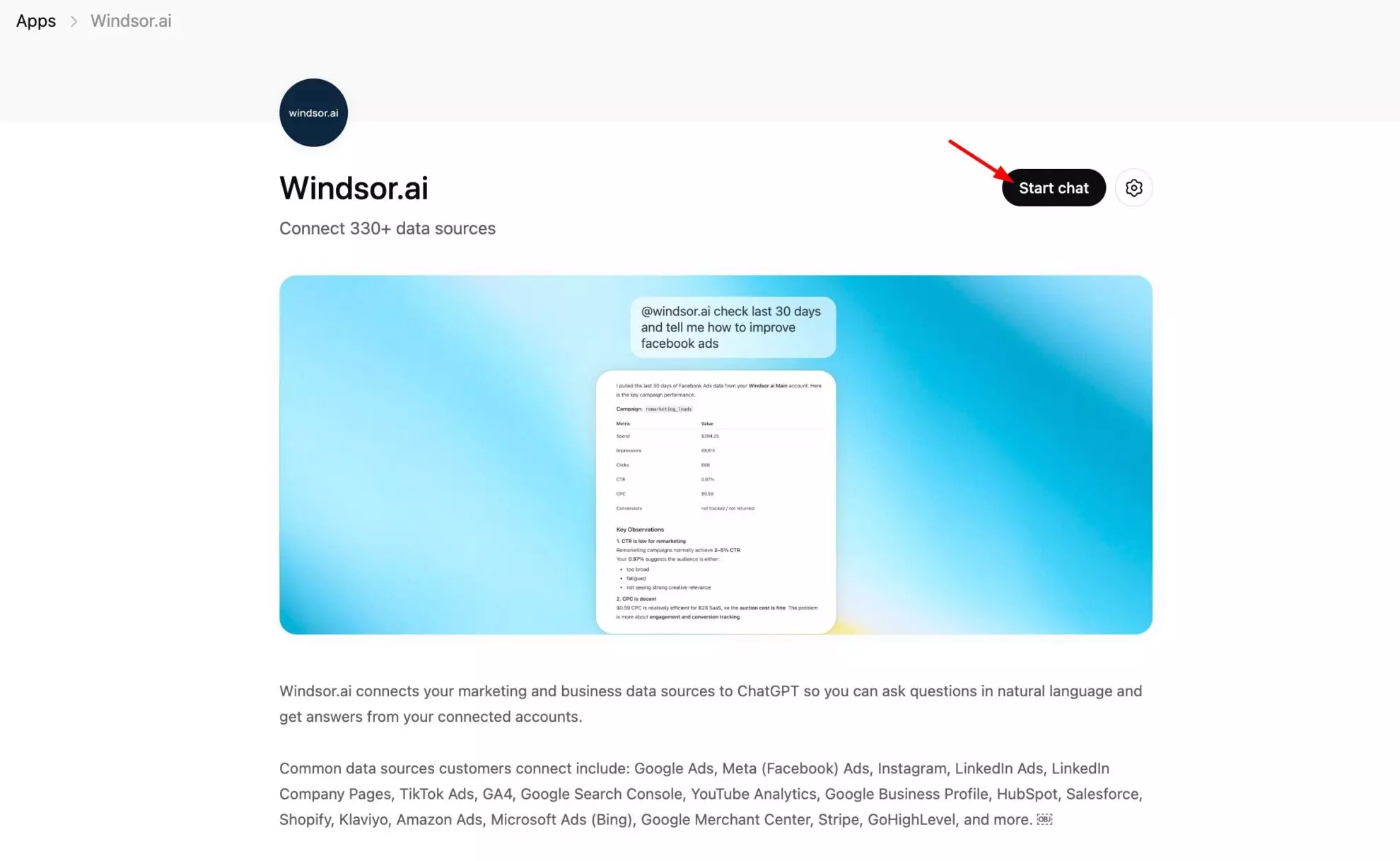
Once installed, confirm the connection is live:
List the data sources connected to my Windsor account. Do you see GitHub there?If GitHub shows up in the list, you’re ready to start asking ChatGPT about your repositories, issues, and contributors in plain language.
The metrics that matter for GitHub
| Metric | What it tells you |
|---|---|
| Stars | How many people have starred a repository, a rough signal of external interest and adoption. |
| Forks | How many people have copied a repository to build on it or contribute back, a sign of active reuse beyond the original team. |
| Open Issues Count | The size of a repository’s current backlog of open issues and pull requests combined. |
| Issue State | Whether an individual issue is open or closed, the basis for tracking how fast a backlog gets worked down. |
| Issue Comments | How much discussion a single issue has generated, useful for spotting contentious or high-attention items. |
| Pull Request Merged At | When a pull request actually shipped, letting you separate real merged work from PRs that were simply closed. |
| Pull Request Additions | Lines of code added in a pull request, one input into how large or risky a change is. |
| Pull Request Deletions | Lines of code removed in a pull request, useful alongside additions for judging the true size of a change. |
| Pull Request Review Comments | How many review comments a pull request received, a proxy for how thoroughly it was scrutinized before merge. |
| Contributor Commit Total | Total commits attributed to a single contributor, the base number for ranking individual output. |
| Review State | Whether a code review was approved, requested changes, or just commented, the outcome of the review step. |
| Workflow Run Conclusion | Whether a CI run succeeded, failed, or was cancelled, a direct read on build health. |
What to ask ChatGPT: prompt ideas
Repository activity
Rank my repositories by stars and forks so I can see which ones are gaining the most outside traction.
List every repository where the open issues count has grown over the last month.
Pull request and code review velocity
Show me pull requests merged this week along with their additions and deletions, so I can see the size of what shipped.
Find pull requests with a high number of review comments that still don't have an approved review, so I know what's stuck.
Issue tracking
List open issues sorted by comment count so I can see which ones are generating the most discussion.
The GitHub connection through Windsor.ai is read-only. ChatGPT can analyze repository, issue, pull request, and contributor data, but it can’t create issues, merge pull requests, or change repository settings on your behalf.
Other ways to connect GitHub to ChatGPT
Manual export
You can pull issue, pull request, and commit data out of GitHub through its API or the repository Insights tab and load it into ChatGPT as a file. It works, but it’s a static snapshot: every update means exporting and uploading again, and there’s no way to ask a follow-up question against fresh data without repeating the whole process.
Zapier or Make
Automation platforms like Zapier or Make can move GitHub events, such as new issues or pull requests, into other tools as they happen. It’s a still-maintained workflow for triggering actions elsewhere, but it doesn’t give ChatGPT a queryable view of your historical repository data the way a direct connection does.
Neither approach gives ChatGPT the same live, ask-anything view into your GitHub data as connecting directly through Windsor.ai.
Conclusion
Connecting GitHub to ChatGPT through Windsor.ai turns repository, issue, and contributor activity into something you can ask about directly, without exporting files or writing scripts against the GitHub API. With 748 fields available, it’s enough detail to track engineering output alongside every other data source your team already has connected.
🚀 Ready to connect GitHub to ChatGPT? Connect GitHub to Windsor.ai and start asking about your repositories today.
FAQs
What's the fastest way to connect GitHub to ChatGPT?
Installing Windsor’s native ChatGPT app and linking your GitHub account through Windsor.ai is the fastest option. It takes under a minute and doesn’t require the GitHub API, a script, or a manual file export.
Do I need to write any code to connect GitHub to ChatGPT?
No. Connecting through Windsor.ai’s native ChatGPT app is a point-and-click process: authorize GitHub, install the app in ChatGPT, and approve the permissions. There are no API keys or scripts to manage.
Can ChatGPT analyze my GitHub repository performance?
Yes. Once connected, you can ask ChatGPT about open issues, pull request activity, commit and code review comments, and contributor output across your repositories, in plain language.
Can I connect multiple GitHub repositories or organizations?
Yes. During setup at onboard.windsor.ai/app/github you can authorize access to multiple repositories or organizations, and query all of them from the same ChatGPT conversation.
What GitHub metrics and data are available through Windsor.ai?
The GitHub connector returns 748 fields in total, 95 metrics and 653 dimensions, covering issues, pull requests, commits, commit comments and reactions, collaborators, contributor activity totals, issue milestones with open and closed issue counts, releases, deployments, and repository metadata.
Is Windsor.ai free to use for connecting GitHub to ChatGPT?
Windsor.ai offers a free forever plan with no credit card required, alongside paid plans starting at $19 a month for higher usage needs.
Is the GitHub to ChatGPT connection read-only, or can ChatGPT make changes to my repositories?
The connection is read-only. ChatGPT can analyze your GitHub data, but it can’t create issues, merge pull requests, or change repository settings. Windsor’s write actions currently cover platforms like Meta Ads, Google Ads, and Klaviyo, not GitHub.
How does connecting GitHub to Windsor.ai compare to exporting CSVs or using Zapier?
A manual export or a Zapier and Make automation can move GitHub data around, but both are either a static snapshot or an event-trigger workflow. Connecting through Windsor.ai gives ChatGPT a live, queryable view of your GitHub data that stays current without any manual step.
Can I combine GitHub data with other tools in the same ChatGPT conversation?
Yes. GitHub is one of Windsor’s 350+ connectors, so you can blend repository and issue activity with data from your CRM, support desk, or marketing platforms in the same conversation.


