 Destinations
 Data sources
 AI insights
 About us
 Careers
 Security
 Customer reviews
 Contact us
 Affiliate program
 Solution partners
 Template gallery
 Looker Studio templates
 Power BI templates
 Excel templates
 Google Sheets templates
 Tableau templates
 Facebook Ads templates
 Google Ads templates
 Data fields & Metrics
 AI prompt library & Guides
 Product documentation
 API documentation
 Case studies
 Blog
Blog Data models
 Windsor vs Supermetrics
 Windsor vs Funnel.io
 Windsor vs Fivetran
 Windsor vs Rivery
 Windsor vs Portermetrics
 Windsor vs Coupler.io
 Last updated: 3 September 2026




Tableau is widely used for data visualization. To get your GA4, Facebook Ads, Google Ads, Bing Ads, LinkedIn Ads data into Tableau, Windsor.ai connects to 350+ sources and normalizes the data for you.
With the connector below you can easily get all your data from:
- GA4
- Google Ads
- Facebook Ads
- Bing Ads
- LinkedIn Ads
- Snapchat Ads
- Twitter Ads
- Salesforce
- HubSpot
- Stripe
- Pipedrive
- Zoho
- …
into Tableau. The actual list of channels is longer (and growing) and can be found here: Tableau Data Connectors
A note on how this works today: Tableau’s own external/custom data connector framework (the “Web Data Connector”) has been deprecated and retired from Tableau Desktop. Until Tableau reinstates a direct connector option, the reliable path is to route your Windsor.ai data through Google Sheets (or Google BigQuery) as an intermediary, then connect Tableau to that. It’s a couple more clicks than a direct connector, but it works with what Tableau currently supports, and Windsor.ai keeps the underlying data refreshed automatically.
Let’s get started.
You’ll need access to authorize apps on all the platforms you wish to integrate, a Google account, and Tableau Desktop installed. No programming skills are required.
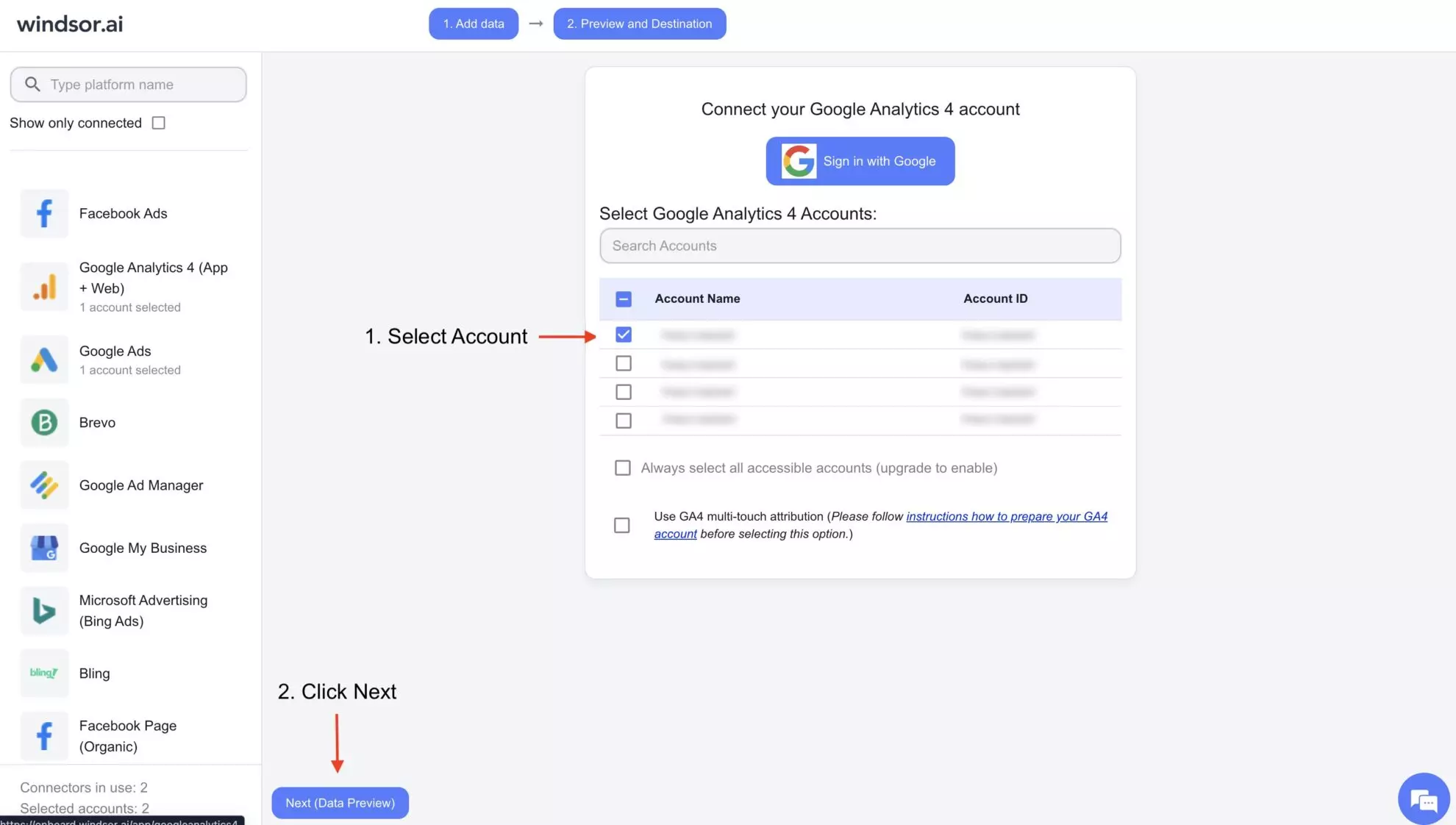
1. Connect your data source in Windsor.ai
Create a Windsor.ai account and log in. Connect the data source you need (GA4, Facebook Ads, Bing Ads, LinkedIn Ads, Salesforce, etc.), select the account(s), and grant access.
2. Bridge it to Tableau via Google Sheets
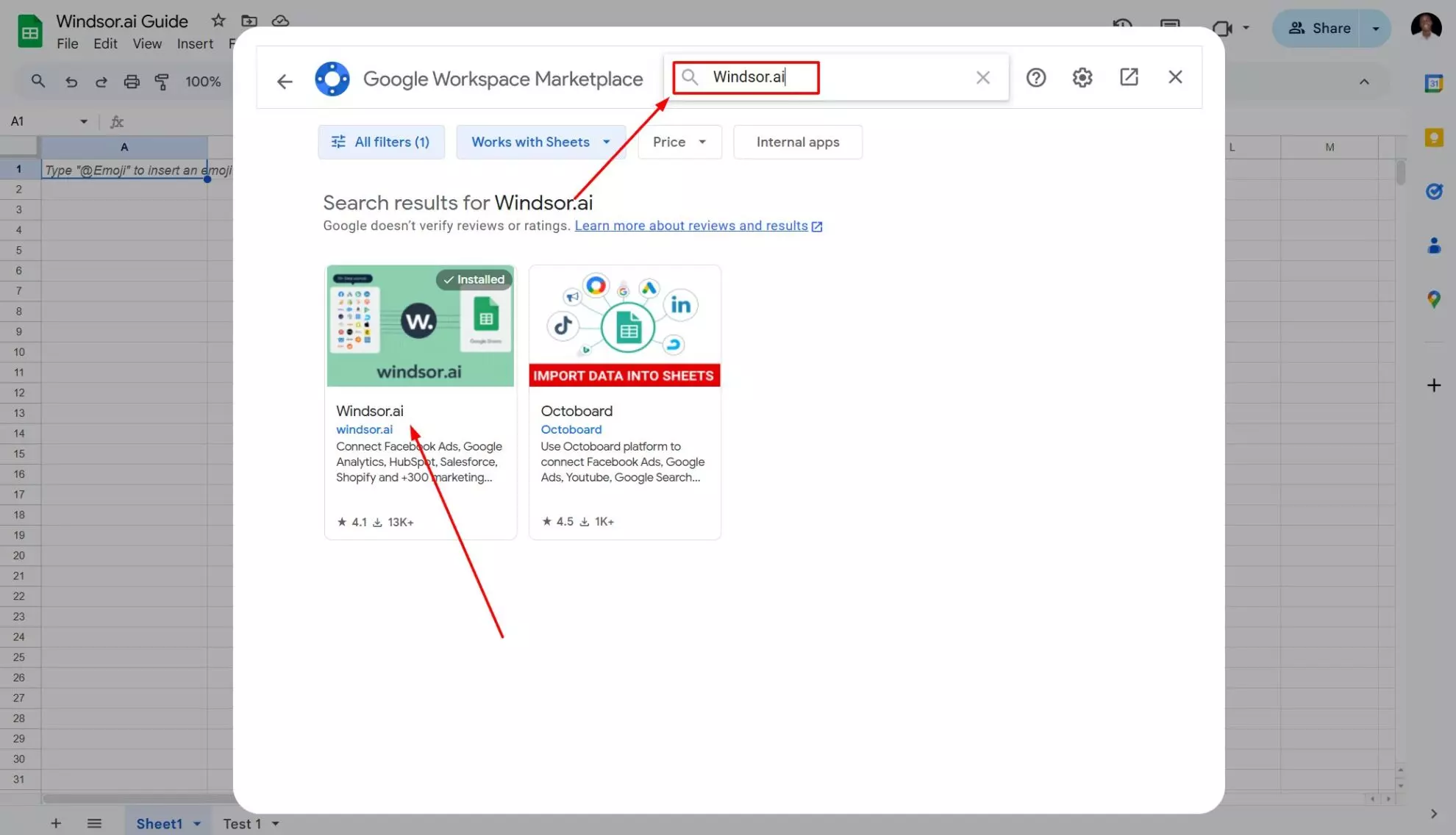
- Open a new Google Sheets document, click Extensions, then Get Add-ons.

- Search for Windsor.ai and install the extension.

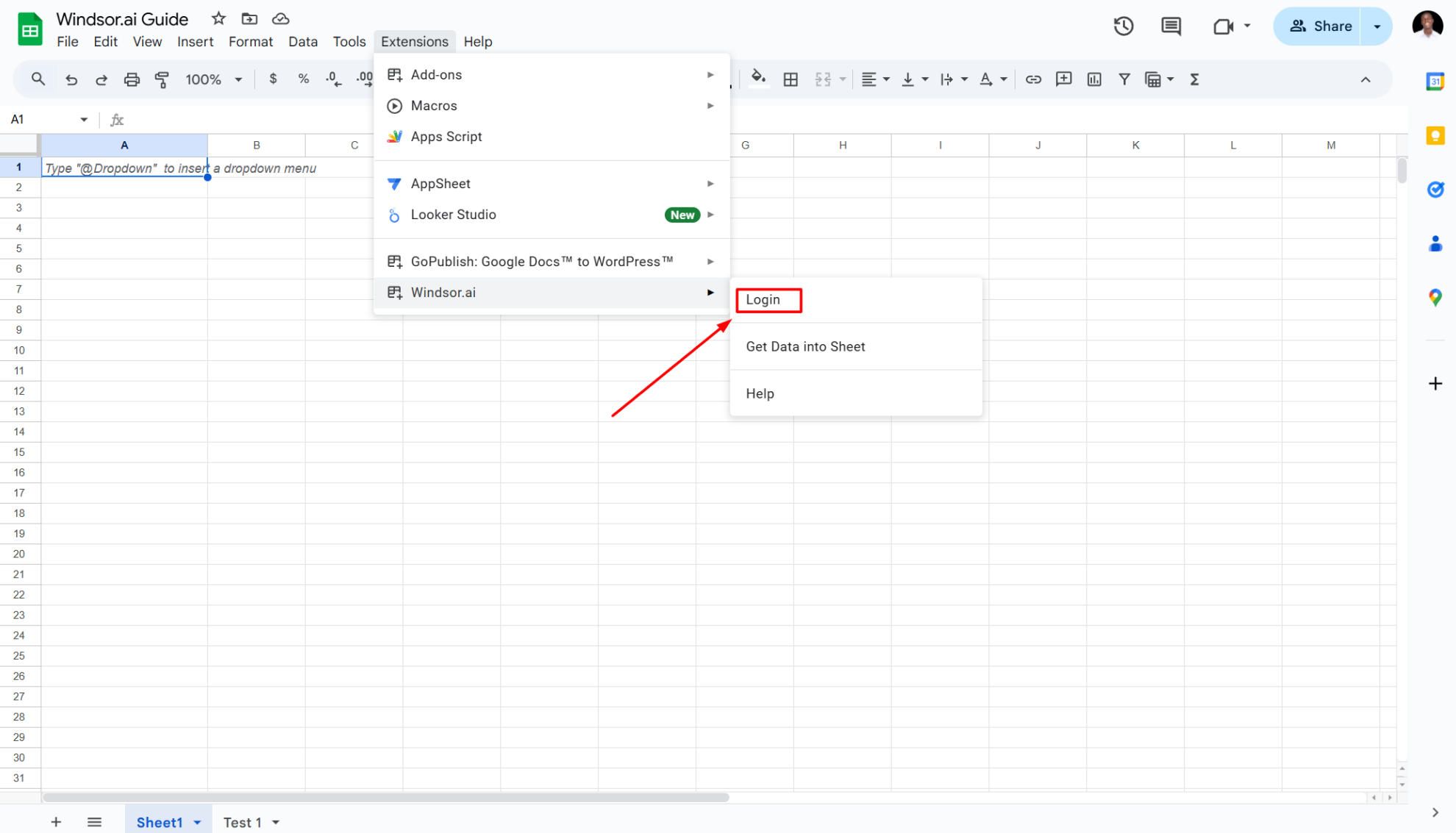
- Choose the Google account tied to your Windsor.ai account, sign in, and grant access. Then go back to Extensions > Windsor.ai > Login.

- Paste your API Key from the Windsor.ai dashboard and log in.
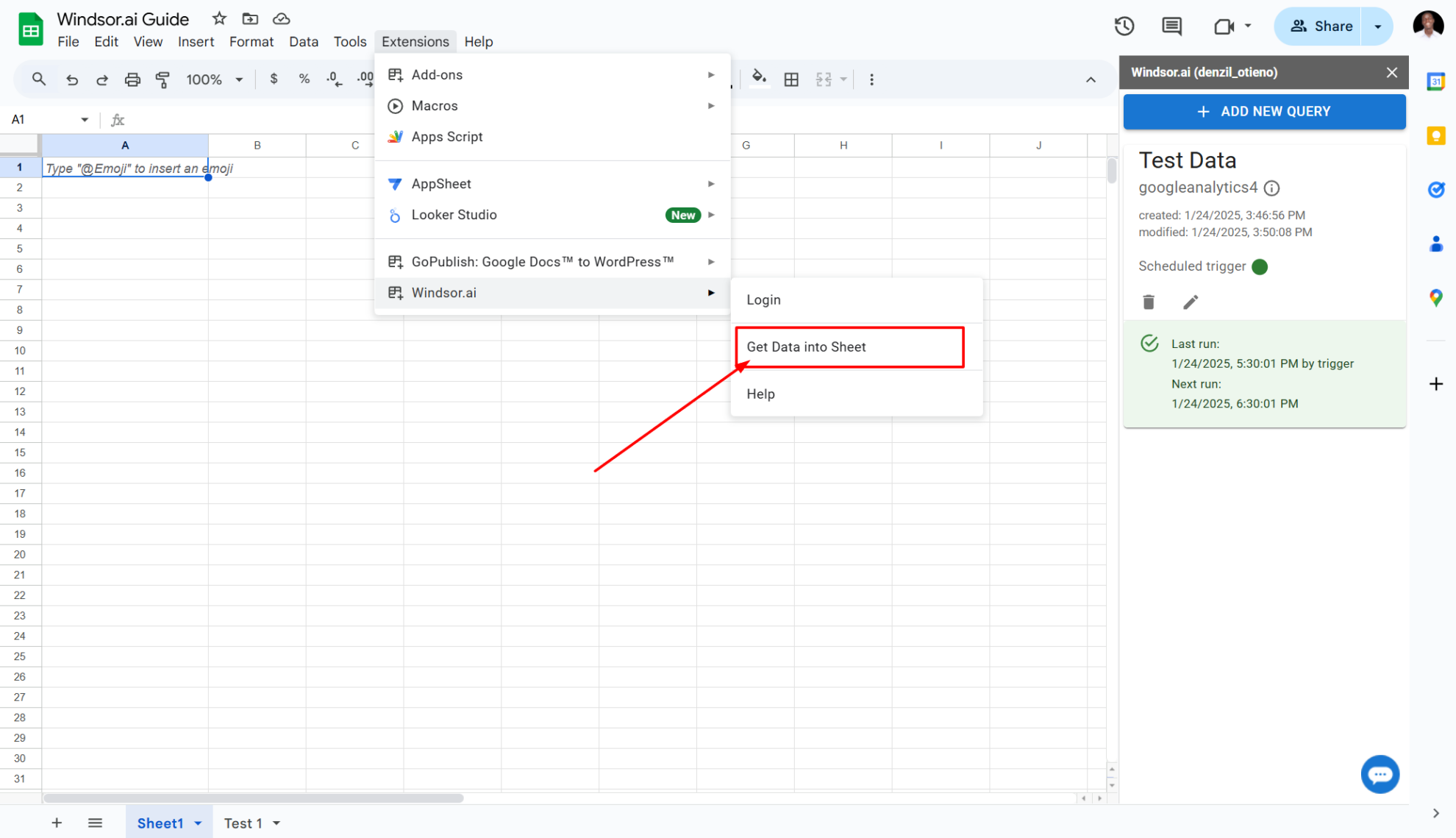
- Back in Google Sheets, go to Extensions > Windsor.ai > Get Data into Sheet.

- Click Add New Query and set your filters: data source, connected account(s), fields, and date range.

- Click Load Data.
- Your data is now in the sheet, ready to import into Tableau.





3. Import the Google Sheet into Tableau
- Open Tableau Desktop, go to the Data tab, and click New Data Source.

- Select More, then Google Drive, and grant access.

- Select the sheet you just populated and click Connect.
- Your data is now in Tableau, ready for analysis.


You can schedule the Google Sheets query to refresh automatically, so your Tableau data source stays current without repeating these steps. See the full Tableau integration guide for more detail, including scheduling and filtering options.
💡 Tableau is not the only destination for this data. The same connectors can also feed an AI assistant through Windsor MCP, so you can ask about the numbers in plain language without building a view first.
In case you do not have a marketing dashboard at hand to connect your data to, please have a look at our Marketing Report Template gallery. You can find examples and templates which are ready to be used with our data sets. If you have any questions just drop us a message in the chat and we’ll get back to you immediately.


