 Destinations
 Data sources
 AI insights
 About us
 Careers
 Security
 Customer reviews
 Contact us
 Affiliate program
 Solution partners
 Template gallery
 Looker Studio templates
 Power BI templates
 Excel templates
 Google Sheets templates
 Tableau templates
 Facebook Ads templates
 Google Ads templates
 Data fields & Metrics
 AI prompt library & Guides
 Product documentation
 API documentation
 Case studies
 Blog
Blog Data models
 Windsor vs Supermetrics
 Windsor vs Funnel.io
 Windsor vs Fivetran
 Windsor vs Rivery
 Windsor vs Portermetrics
 Windsor vs Coupler.io
 Last updated: 1 September 2026




The fastest way to connect MailerLite to ChatGPT is to install Windsor’s native app in ChatGPT and link your MailerLite account through Windsor.ai. Once the two are connected, you can ask ChatGPT about your automations, forms, and subscribers directly in the chat, no code, no custom connector URL, and no manual export required.
MailerLite’s own dashboard shows automation and form performance one screen at a time, so pulling a fuller picture usually means exporting CSVs by hand or building something to stitch the numbers together. Connecting MailerLite to Windsor.ai instead gives ChatGPT live, natural-language access to that data, and lets you blend it with every other channel you track in the same conversation.
2 steps to connect MailerLite to ChatGPT
Takes under a minute, no code or manual CSV work required.
For the full walkthrough with screenshots, see Windsor’s documentation on integrating data into ChatGPT.
Prerequisites
- A Windsor.ai account (free forever plan, or paid from $19/month).
- A MailerLite account with at least one active automation, campaign, or form.
- A ChatGPT account with access to install apps.
Step 1. Connect MailerLite to Windsor.ai
- Create a free account (or log in) at onboard.windsor.ai/app/mailerlite.
- Select MailerLite from the list of data sources.
- Authorize Windsor to access your MailerLite account.
- Repeat the process if you manage more than one MailerLite account, Windsor can connect several side by side.
Step 2. Connect the Windsor.ai app in ChatGPT
- In ChatGPT, open the apps menu and search for Windsor.ai.
- Install Windsor’s native app and confirm access when prompted.
- Once connected, MailerLite appears alongside your other Windsor data sources inside ChatGPT.
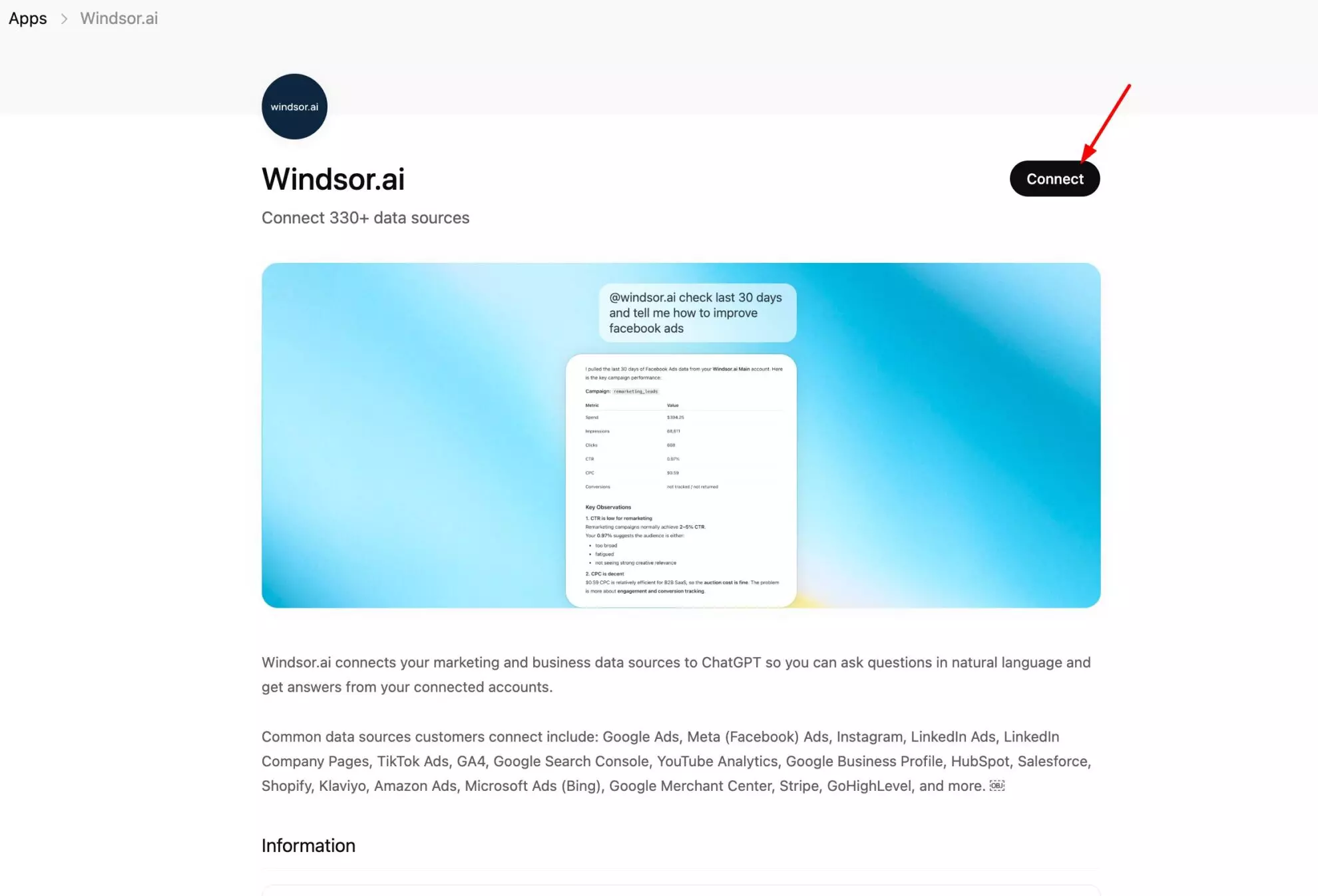
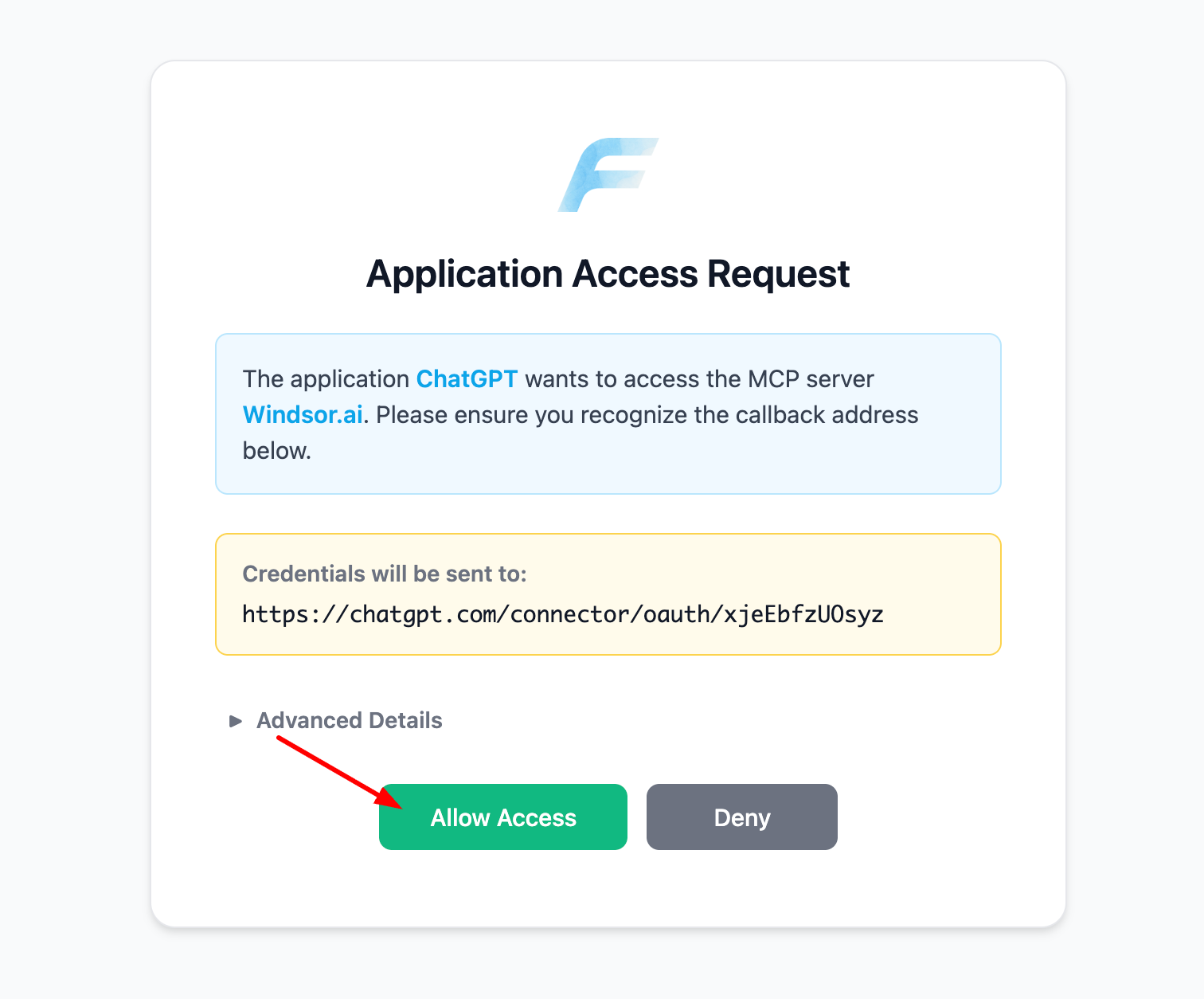
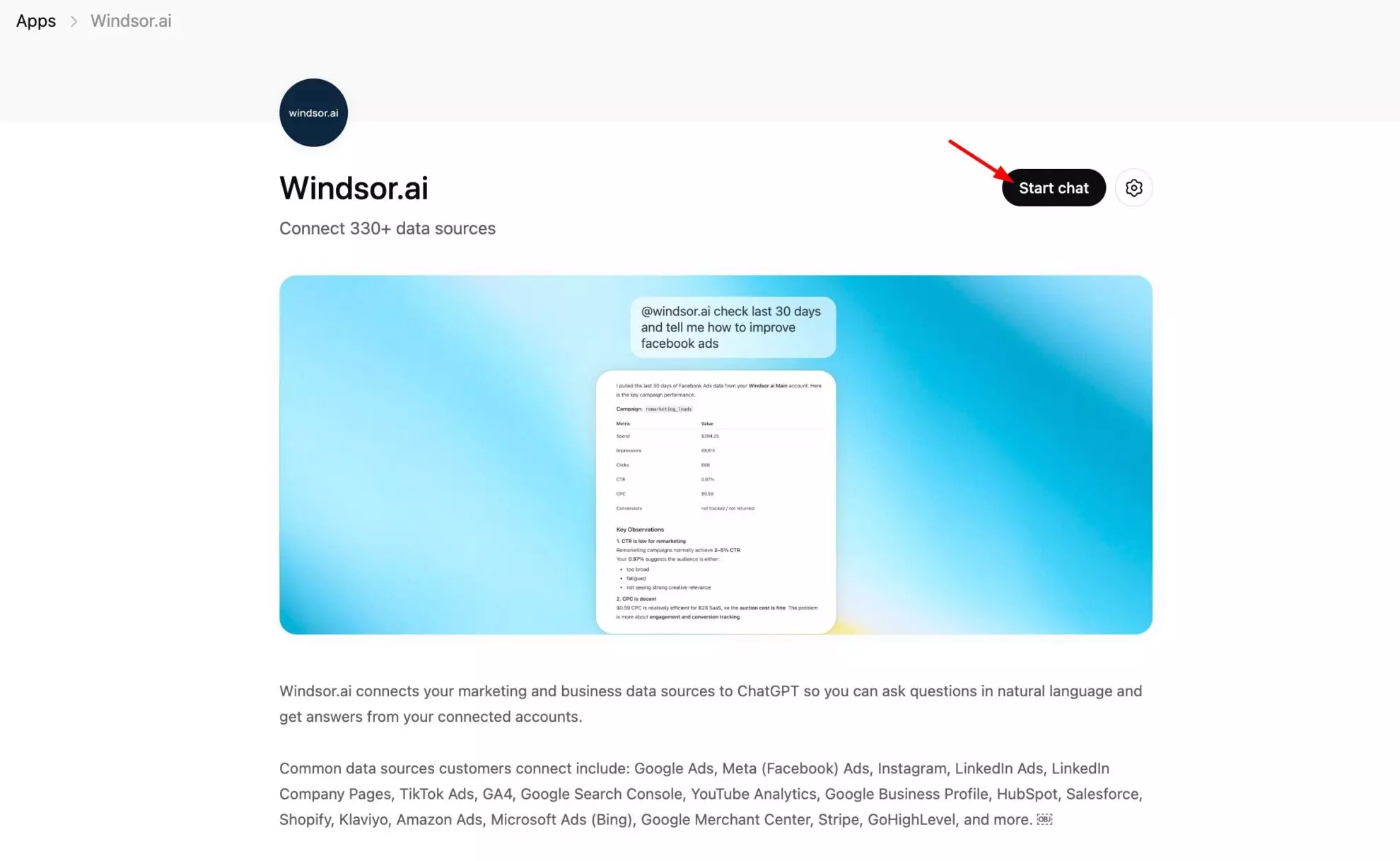
Verify the connection by asking ChatGPT:
List the data sources connected to my Windsor account. Do you see MailerLite there?Once ChatGPT confirms MailerLite is connected, you’re ready to ask about your automations, forms, and subscribers in plain language.
The metrics that matter for MailerLite
| Metric | What it tells you |
|---|---|
| subscribers.sent | How many emails were actually delivered to a subscriber, the base number every open and click rate is calculated against. |
| subscribers.opens_count | How many times a subscriber opened your emails, the core signal of whether your subject lines and send times are working. |
| subscribers.open_rate | The share of sent emails a given subscriber opened, useful for spotting your most and least engaged contacts. |
| subscribers.clicks_count | How many times a subscriber clicked a link inside your emails, a stronger engagement signal than an open. |
| subscribers.click_rate | The share of a subscriber’s opens that turned into a click, a read on how compelling your content and calls to action are. |
| subscribers.status | Whether a contact is active, unsubscribed, or on your junk list, the field that shows how much of your list is actually reachable. |
| subscribers.source | Where a subscriber originally signed up (form, import, API, and more), useful for judging which channel brings the most engaged contacts. |
| campaigns.status | Whether a campaign is a draft, still sending, or finished, so you can separate live results from work in progress. |
| campaigns.type_for_humans | The kind of campaign it is (regular, A/B test, resend, and more), letting you compare performance by campaign format. |
| automations.qualified_subscribers_count | How many subscribers have met the trigger conditions for an automation, the top-of-funnel number for that workflow. |
| automations.emails_count | How many emails are built into a given automation sequence, a quick read on how developed that workflow is. |
| segments.total | How many subscribers currently sit inside a segment, the audience size you’re targeting with that slice of your list. |
What to ask ChatGPT: prompt ideas
Campaign performance
Show me open rate and click rate by campaign for the last 30 days, and flag any campaign under 15% opens.
Which of my campaigns are still in draft or currently sending?
Subscriber growth and engagement
Break down my subscriber list by status and source, and tell me what share of contacts are actually active.
Rank my most engaged subscribers by clicks count and open rate over the last quarter.
Automation performance
List my automations with qualified subscriber counts and emails count, and flag any automation with fewer than 3 emails.
The MailerLite connection through Windsor is read-only. ChatGPT can analyze your campaigns, automations, forms, and subscribers, but it can’t create, pause, or edit anything inside MailerLite itself.
Bonus: analyze MailerLite alongside your full stack
Windsor connects 350+ sources, so MailerLite doesn’t have to live in its own silo. A few realistic blends:
- Full-funnel acquisition cost. Blend MailerLite campaign and automation performance with Facebook Ads and Google Ads spend to see one cross-channel cost-per-subscriber and cost-per-customer number instead of judging email in isolation.
- On-site behavior after the click. Pair MailerLite click and open data with GA4 to see what emailed subscribers actually do on your site once they get there, not just whether they opened the message.
- Email-driven revenue. Blend MailerLite subscriber and campaign engagement with your Shopify or Stripe revenue data for a single view of how much revenue your email program is actually driving.
Other ways to connect MailerLite to ChatGPT
Manual CSV export
MailerLite lets you export subscriber and campaign data as CSV files, which you can upload straight into a ChatGPT conversation. That works for a one-off analysis, but it’s a static snapshot. It won’t pick up new automations or form activity on its own, so you’d need to re-export every time you want fresh numbers.
Zapier or Make
MailerLite connects to Zapier and Make, so you can build a workflow that pushes automation or subscriber events into a spreadsheet or another app. That’s a reasonable option if you already have such a workflow running, but it needs to be built and maintained separately, and like a CSV export, it doesn’t give ChatGPT a live view of your MailerLite account the way the direct Windsor connector does.
Conclusion
Connecting MailerLite to ChatGPT through Windsor.ai takes two steps and gives you a live, natural-language view of your automations, forms, and subscribers without exporting a single CSV. From there, you can ask ChatGPT to analyze performance on its own or alongside every other channel you track in Windsor.
🚀 Ready to see your MailerLite data inside ChatGPT? Connect MailerLite to Windsor.ai and start asking questions in plain language today.
FAQs
What's the fastest way to connect MailerLite to ChatGPT?
The native Windsor.ai app for ChatGPT is the fastest route. It takes about a minute, needs no manual CSV export, and doesn’t require pasting a custom connector URL.
Do I need to write any code to connect MailerLite to ChatGPT?
No. Connecting MailerLite to Windsor.ai and installing Windsor’s app in ChatGPT is entirely point-and-click, no code or developer setup required.
Can ChatGPT analyze my MailerLite automation performance?
Yes. Once connected, ChatGPT can pull automation-level data such as sent count, opens, open rate, clicks, and click rate, and analyze it in plain language on request.
Can I connect more than one MailerLite account?
Yes. Windsor.ai supports connecting multiple MailerLite accounts side by side, which is useful for agencies or teams managing several brands.
What MailerLite metrics can Windsor.ai pull into ChatGPT?
Windsor exposes automation email and qualified subscriber counts, subscriber sent, open, and click counts with their rates, embedded, popup, and promotion form opens and conversions, total segments, and account timezone offset, along with automation details like name, status, creation date, and steps.
Is connecting MailerLite to Windsor.ai free?
Windsor.ai has a free forever plan with no credit card required, and paid plans starting from $19/month for higher usage.
Can ChatGPT update or edit my MailerLite automations and forms?
No. The MailerLite connection is read-only. It’s built for analysis and reporting, not for creating or editing automations, forms, or subscribers.
How does this compare to exporting MailerLite data manually?
A manual CSV export is a static snapshot that goes stale as soon as new automations or subscribers come in. The direct Windsor connection gives ChatGPT a live view instead, so you don’t have to re-export every time you want current numbers.
Can I combine MailerLite data with other marketing channels in ChatGPT?
Yes. Windsor connects 350+ data sources, so you can blend MailerLite data with Google Ads, Facebook Ads, GA4, and any other connected platform in the same ChatGPT conversation for blended, cross-channel reporting.


