 Destinations
 Data sources
 AI insights
 About us
 Careers
 Security
 Customer reviews
 Contact us
 Affiliate program
 Solution partners
 Template gallery
 Looker Studio templates
 Power BI templates
 Excel templates
 Google Sheets templates
 Tableau templates
 Facebook Ads templates
 Google Ads templates
 Data fields & Metrics
 AI prompt library & Guides
 Product documentation
 API documentation
 Case studies
 Blog
Blog Data models
 Windsor vs Supermetrics
 Windsor vs Funnel.io
 Windsor vs Fivetran
 Windsor vs Rivery
 Windsor vs Portermetrics
 Windsor vs Coupler.io
 Last updated: 31 August 2026




You connect an Apify Dataset to ChatGPT with Windsor.ai’s native ChatGPT app: link your Apify account at onboard.windsor.ai/app/apify_dataset, install the Windsor.ai app inside ChatGPT, and ask about your dataset in plain language. No API key wrangling and no code.
Without this, checking on a scrape usually means opening the Apify console, downloading a dataset as CSV or JSON, and pasting it somewhere else to make sense of it, a manual step that goes stale the moment the actor runs again. Connecting the dataset directly to ChatGPT skips that export loop and keeps your scraped data in the same place you already ask questions about the rest of your marketing and data stack.
2 steps to connect Apify Dataset to ChatGPT
Takes under a minute, no code or manual CSV work required.
Full walkthrough: How to integrate data into ChatGPT with Windsor.ai.
Prerequisites
- A Windsor.ai account (free forever plan, no credit card, or paid from $19/month).
- An Apify account with at least one dataset or dataset collection containing scraped or collected items.
- A ChatGPT account with apps enabled.
Step 1. Connect Apify Dataset to Windsor.ai
Windsor.ai reads your Apify Dataset data directly, so this step happens once, before you ever open ChatGPT.
- Go to onboard.windsor.ai/app/apify_dataset and create a free Windsor.ai account, or log in if you already have one.
- Select Apify Dataset as the data source and authorize Windsor.ai to access your Apify account.
- Connect multiple datasets or dataset collections if you run several actors or scraping projects.
Step 2. Connect the Windsor.ai app in ChatGPT
In ChatGPT, open the app or connector menu and search for Windsor.ai.
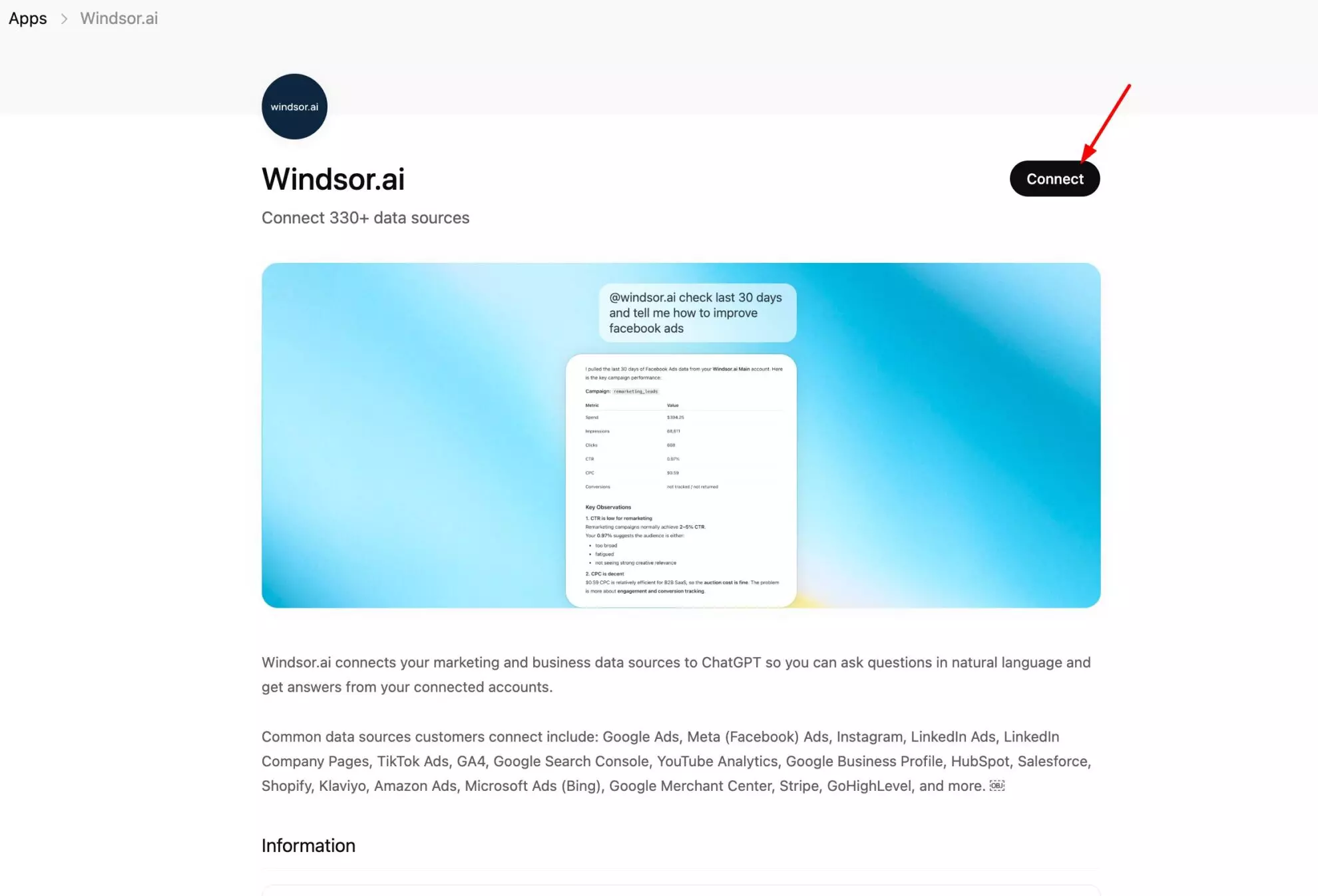
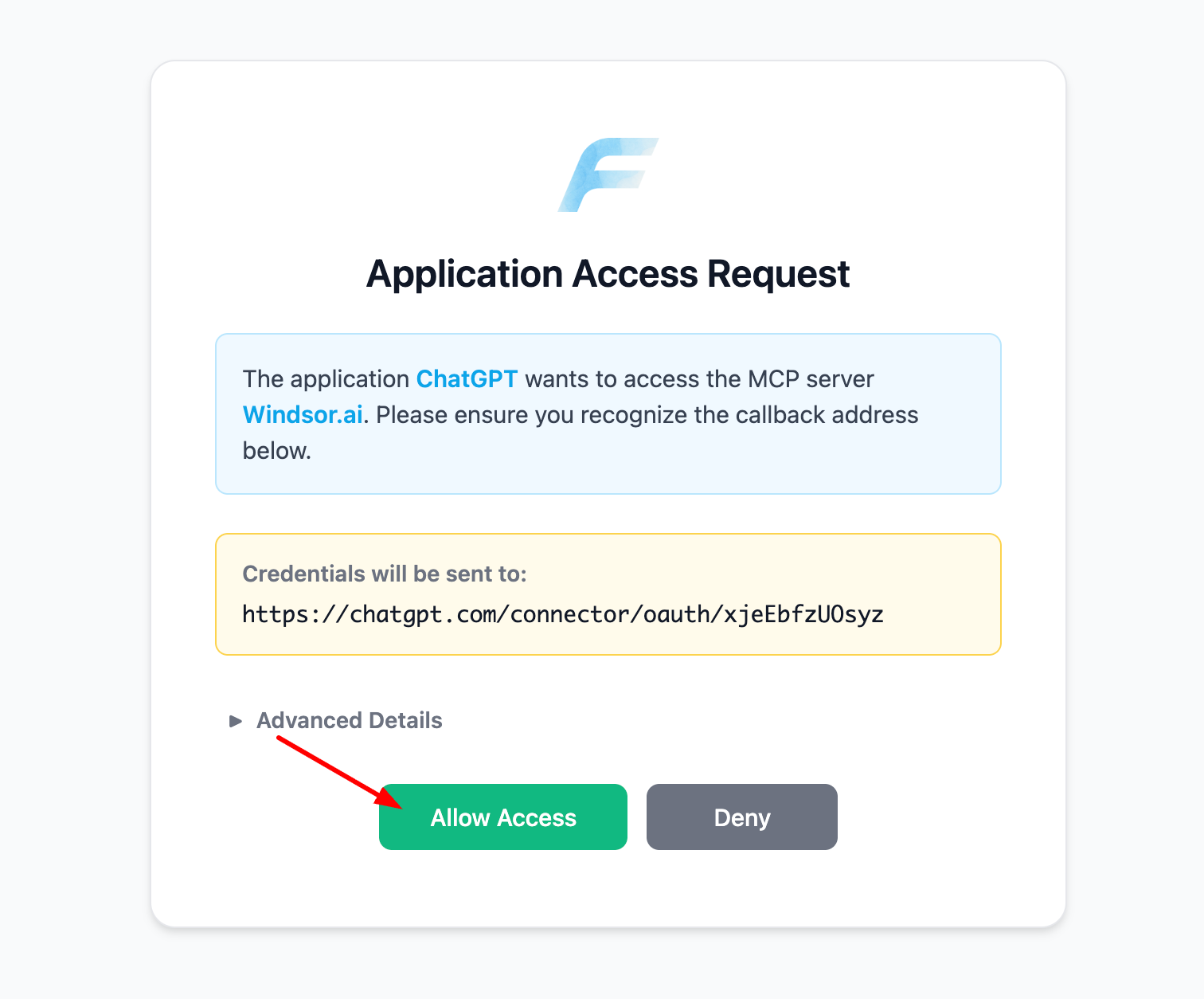
Install the Windsor.ai app and allow it access to your connected data sources, including the Apify Dataset account you just added.
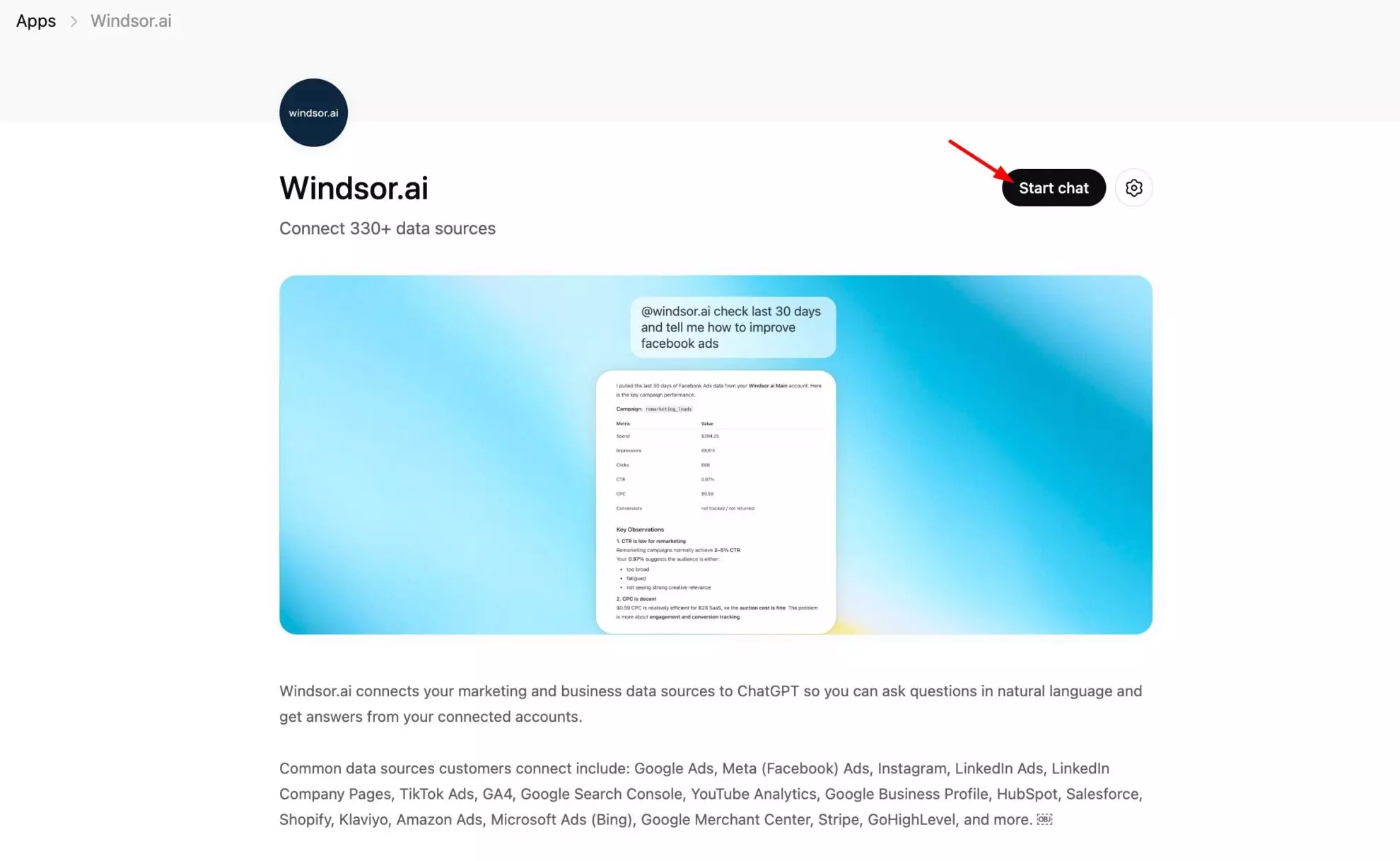
Once installed, the Windsor.ai app shows up as an active connector in ChatGPT, ready to pull in your Apify Dataset data on request.
Confirm the connection worked before asking anything else:
List the data sources connected to my Windsor account. Do you see Apify Dataset there?If Apify Dataset appears in that list, you’re set. From here you can query your scraped data in ChatGPT using natural language, no dashboard, no manual export.
The metrics that matter for Apify Dataset
| Field | What it tells you |
|---|---|
| dataset.id | The unique identifier of a dataset, useful for referencing one specific scrape run when you ask a follow-up question. |
| dataset.name | The name assigned to the dataset, usually matching the actor or project that produced it. |
| dataset.itemCount | The total number of records stored in the dataset, including any flagged with errors. |
| dataset.cleanItemCount | The subset of records free of errors, the number you can actually trust for analysis. |
| dataset.schema | The structure of fields present in the dataset’s items, showing what columns or attributes you can query. |
| dataset.fields | The list of field names captured in the dataset’s items, useful for checking what a scrape actually collected. |
| dataset.createdAt | When the dataset was first created by an actor run. |
| dataset.modifiedAt | When the dataset was last updated, telling you how fresh the data is. |
| dataset.actId | The Apify actor, the scraper, that produced the dataset. |
| dataset.userId | The Apify account that owns the dataset, useful when managing scrapes across multiple clients. |
| dataset_collection.name | The name of a dataset collection, useful when you’re tracking several related scrapes together. |
| dataset_collection.itemCount | The total number of records across every dataset grouped inside a collection. |
What to ask ChatGPT: prompt ideas
The Apify Dataset connection through Windsor.ai is read-only, built for querying your scraped data in plain language, not for triggering or managing actor runs.
Checking data freshness and completeness
Summarize the records in my product-listings dataset from the last run.
Show me the itemCount and cleanItemCount for every dataset modified in the last 7 days.
Understanding dataset structure
List the fields in my most recently created dataset and describe its schema.
Which of my datasets has the most fields defined in its schema?
Comparing datasets and collections
Compare itemCount across my dataset collections to see which one is growing fastest.
Bonus: analyze Apify Dataset alongside your full stack
Windsor connects 350+ sources, so Apify Dataset doesn’t have to live in its own silo. A few realistic blends:
- Cross-channel reporting. Blend scraped competitive or market data from Apify Dataset with your own channel data from platforms like Facebook Ads to see how the outside market lines up with your own campaigns.
- Single source of truth. Instead of checking the Apify console for one scrape and a separate dashboard for everything else, query dataset item counts and schema in the same place as your other 350+ connected sources.
- Blended ROAS. Pair scraped pricing or market data from Apify Dataset with your ad spend and revenue figures from Google Ads to see whether your pricing strategy is keeping pace with the market around each campaign.
Other ways to connect Apify Dataset to ChatGPT
Manual CSV export
Apify lets you download any dataset as CSV, JSON, or Excel straight from the console. It works for a one-off check, but it’s a static snapshot the moment you export it, and you’re back in the console the next time you want an update.
Zapier or Make
Zapier and Make can move new dataset items into another app whenever an actor run finishes. That’s useful for automation, but it’s a separate workflow you still have to build and maintain, and it doesn’t let you ask ChatGPT a question about the data directly.
Neither approach gives you the live, conversational view the direct Windsor.ai connector does.
Conclusion
Connecting Apify Dataset to ChatGPT through Windsor.ai takes two steps and no code: link your Apify account once at the onboard link, then install the Windsor.ai app in ChatGPT. From there, item counts, clean item counts, and dataset details are all a question away, and you can blend them with any of Windsor’s other 350+ connected sources.
🚀 Ready to connect Apify Dataset to ChatGPT? Connect Apify Dataset to Windsor.ai and start asking ChatGPT about your scraped data today.
FAQs
What is the fastest way to send Apify Dataset data to ChatGPT?
The native Windsor.ai app in ChatGPT is the fastest route. It reads your Apify Dataset data live, so there’s no CSV export, no spreadsheet upload, and no manual copy-pasting involved.
Do I need to write any code to connect Apify Dataset to ChatGPT?
No. Connecting Apify Dataset to Windsor.ai and installing the Windsor.ai app in ChatGPT is a click-through process. No API keys, scripts, or custom connector setup are required.
Can ChatGPT analyze my Apify Dataset performance directly?
Yes. Once connected, you can ask ChatGPT things like item counts and clean item counts for your datasets or dataset collections, filtered by date or grouped by dataset name, and it answers using your live Apify data.
Can I connect multiple Apify accounts or datasets at once?
Yes. Windsor.ai lets you connect multiple Apify datasets or dataset collections under one account, which is useful if you run several scraping actors or manage data for multiple clients.
What metrics and fields does the Apify Dataset connector provide?
The connector returns 41 fields in total: 4 metrics and 37 dimensions. The metrics are item count and clean item count, tracked separately for individual datasets and for dataset collections. The dimensions cover details like dataset name, dataset ID, dataset title, when a dataset was created, modified, or accessed, its schema, its stats, its fields, and the actor or actor run behind it.
What is the difference between item count and clean item count?
Item count is the total number of items in a dataset or dataset collection. Clean item count is the same total with any items flagged with errors excluded, so it reflects only the usable, error-free items from a scrape.
What is the difference between a dataset and a dataset collection?
A dataset is the output of a single Apify actor run. A dataset collection groups multiple datasets together, so its item count and clean item count reflect totals across all the datasets inside it, not just one run.
Is Windsor.ai free to connect Apify Dataset to ChatGPT?
Windsor.ai offers a free forever plan with no credit card required, which covers connecting Apify Dataset to ChatGPT. Paid plans start from $19/month for higher data volumes and additional features.
How does this compare to manually exporting Apify Dataset data as CSV?
A manual CSV or JSON export from the Apify console is a static snapshot the moment you download it. Connecting through Windsor.ai keeps ChatGPT reading live data, so you’re not stuck re-exporting every time a dataset updates.
Can I combine Apify Dataset data with other sources in ChatGPT?
Yes. Windsor.ai connects to 350+ data sources, so you can blend Apify Dataset item counts and dataset details with your marketing, analytics, or CRM data in the same ChatGPT conversation for cross-channel, blended reporting.


