 Destinations
 Data sources
 AI insights
 About us
 Careers
 Security
 Customer reviews
 Contact us
 Affiliate program
 Solution partners
 Template gallery
 Looker Studio templates
 Power BI templates
 Excel templates
 Google Sheets templates
 Tableau templates
 Facebook Ads templates
 Google Ads templates
 Data fields & Metrics
 AI prompt library & Guides
 Product documentation
 API documentation
 Case studies
 Blog
Blog Data models
 Windsor vs Supermetrics
 Windsor vs Funnel.io
 Windsor vs Fivetran
 Windsor vs Rivery
 Windsor vs Portermetrics
 Windsor vs Coupler.io
 Last updated: 28 August 2026




The fastest way to connect Amazon Vendor Central to ChatGPT is to install Windsor.ai’s native ChatGPT app: connect your Amazon Vendor Central account to Windsor once, then add the Windsor.ai app inside ChatGPT so it can read your shipped revenue, inventory, and product-level sales directly in the chat, no code required.
The alternative is exporting Vendor Central’s sales, inventory, and traffic reports by hand every time you want a fresh number, then copying them into a spreadsheet to compare against your ad spend or other marketplaces. That works for a one-off check, but it leaves your retail data siloed from the rest of your stack and out of date the moment you close the file. Connecting Amazon Vendor Central to Windsor keeps the data live and queryable in ChatGPT instead.
2 steps to connect Amazon Vendor Central to ChatGPT
Takes under a minute, no code or manual CSV work required.
See the full walkthrough in the Windsor.ai documentation.
Prerequisites
- A Windsor.ai account (free forever plan, no credit card, or paid from $19/month)
- An Amazon Vendor Central account, with at least one active vendor code shipping product to Amazon
- A ChatGPT account that can install apps or connectors
Step 1. Connect Amazon Vendor Central to Windsor.ai
Start on the Windsor.ai side:
- Create a free Windsor.ai account, or log in if you already have one
- Go to onboard.windsor.ai/app/amazon_vendor and select Amazon Vendor Central
- Authorize Windsor to access your Vendor Central account
- Repeat the process to connect additional vendor codes or accounts if you manage multiple brands
Step 2. Connect the Windsor.ai app in ChatGPT
Now install the native app inside ChatGPT:
- Open ChatGPT and go to Settings > Connectors (or Apps)
- Search for “Windsor.ai” and install it
- Allow Windsor.ai access when prompted
- Confirm the app appears in your connected apps list
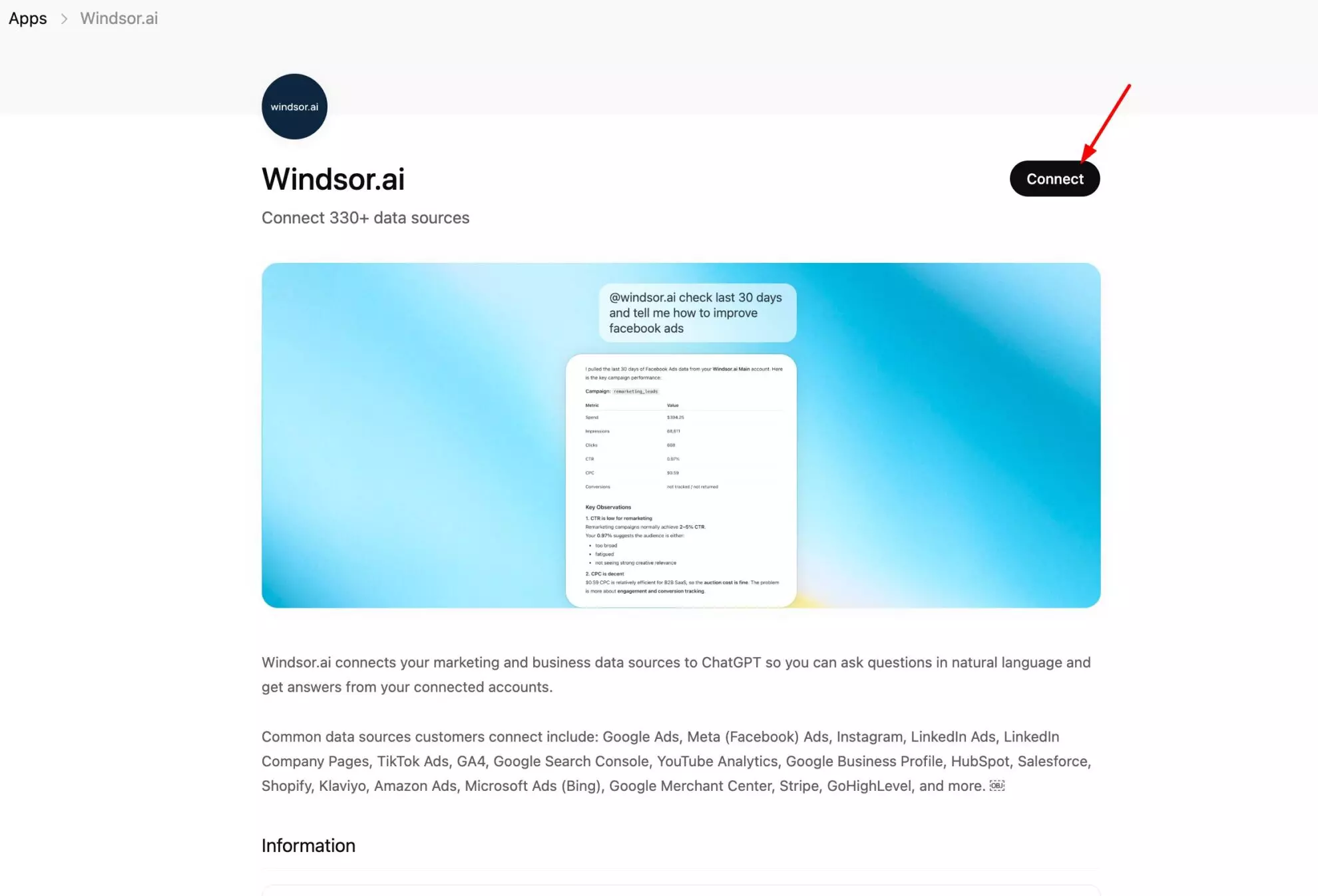
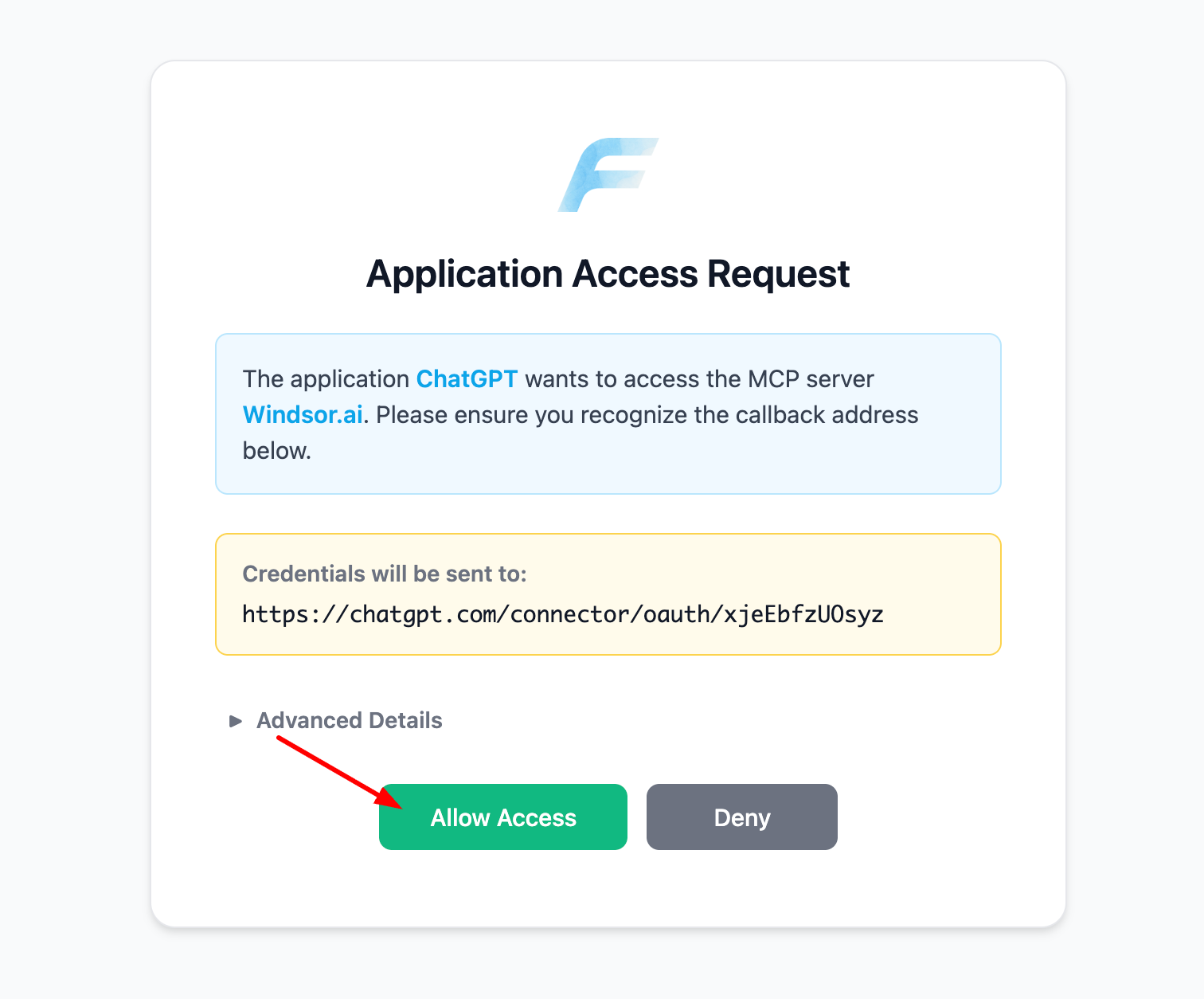
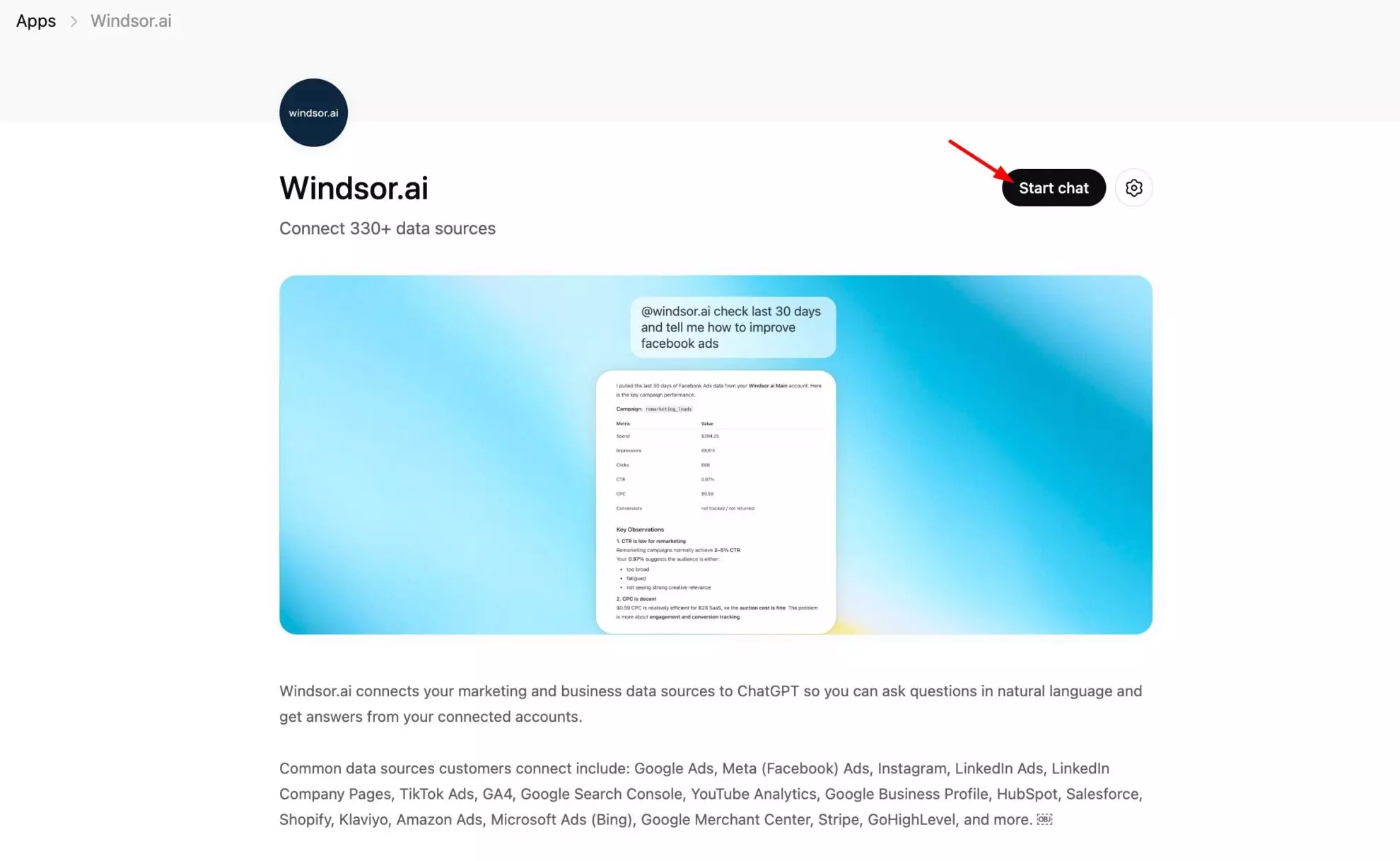
Confirm the connection is live by asking ChatGPT:
List the data sources connected to my Windsor account. Do you see Amazon Vendor Central there?
If Amazon Vendor Central shows up, you’re ready to query your retail data in plain English.
The metrics that matter for Amazon Vendor Central
| Metric | What it tells you |
|---|---|
| ASIN | The unique Amazon product identifier every sales, inventory, and traffic report breaks down by, so you can see performance product by product instead of only in aggregate. |
| Shipped Revenue | The total value of units Amazon has actually shipped to customers, the core top-line number for your vendor business. |
| Ordered Revenue | The value of units customers have ordered, before Amazon ships or cancels them, an early read on demand ahead of shipped revenue. |
| Shipped Units | How many units Amazon has shipped to customers, the sales volume behind your shipped revenue number. |
| Ordered Units | How many units customers have ordered, useful for spotting demand spikes before they show up in shipped numbers. |
| Customer Returns | How many units customers sent back, a signal of product quality or listing accuracy issues. |
| Shipped COGS | What Amazon paid you for the units it shipped, the wholesale cost side of the vendor relationship. |
| Glance Views | How many times shoppers viewed your product detail pages, the top-of-funnel traffic feeding your sales. |
| Sellable On Hand Inventory Units | How many sellable units Amazon currently holds in its fulfillment centers, the stock available to fill new orders. |
| Sell Through Rate | How quickly Amazon is selling through the inventory it holds, a read on whether you are overstocked or understocked. |
| Procurable Product Out Of Stock Rate | The share of time your procurable ASINs were out of stock, direct visibility into lost sales from stockouts. |
| Net Pure Product Margin | Amazon’s margin on your products after accounting for cost of goods and sales discounts, a read on how profitable your catalog is for Amazon to sell. |
What to ask ChatGPT: prompt ideas
Sales and revenue performance
Summarize my Amazon Vendor Central shipped revenue and ordered revenue for the last 30 days, broken down by ASIN.
Which ASINs had the biggest gap between ordered units and shipped units last month?
Inventory and sourcing
Show sellable on-hand inventory units and sell-through rate for my top 10 ASINs by shipped revenue this quarter.
Which ASINs have the highest procurable product out-of-stock rate this month?
Product and ASIN-level analysis
Compare glance views and shipped units by ASIN over the last 90 days to see which products convert traffic into sales best.
The Amazon Vendor Central connection through Windsor is read-only. ChatGPT can analyze your shipped revenue, inventory, and traffic data, but it can’t create purchase orders or change anything inside Vendor Central itself.
Bonus: analyze Amazon Vendor Central alongside your full stack
Windsor connects 350+ sources, so Amazon Vendor Central doesn’t have to live in its own silo. A few realistic blends:
- Blended ROAS across ads and retail. Combine Amazon Vendor Central shipped revenue with Google Ads and Facebook Ads spend to see one cross-channel ROAS number instead of judging retail sales in isolation from what you spent to drive them.
- Full retail revenue view. Blend Amazon Vendor Central shipped revenue with other retail and marketplace channels, like Amazon Seller Central, for a single revenue view across every place you sell instead of switching between dashboards.
- Margin visibility from traffic to inventory. Pair Vendor Central’s net pure product margin and shipped COGS with GA4 traffic and conversion data to see which products are both profitable and in demand, not just moving units.
Other ways to connect Amazon Vendor Central to ChatGPT
Manual CSV export
You can export sales, inventory, and traffic reports from Vendor Central as CSV files and upload them to ChatGPT for a one-off analysis. It works, but it’s a static snapshot: every time you want an updated number you have to re-export and re-upload the file by hand.
Zapier or Make
Zapier or Make can move Vendor Central data into a spreadsheet or database on a schedule. That’s a reasonable automated workflow, but it still needs to be built and maintained separately, and it doesn’t give ChatGPT a live, queryable connection to Vendor Central the way the native Windsor.ai app does.
Neither approach gives you the same live view as connecting Amazon Vendor Central to Windsor directly.
Conclusion
Connecting Amazon Vendor Central to ChatGPT through Windsor.ai takes two steps: link your Vendor Central account to Windsor, then install the Windsor.ai app in ChatGPT. From there you can ask plain-language questions about your shipped revenue, inventory, and product-level performance, and blend that data with your other channels for a single source of truth, without exporting a single CSV.
🚀 Ready to connect Amazon Vendor Central to ChatGPT? Connect your Amazon Vendor Central account to Windsor.ai and start querying your retail data in minutes.
FAQs
What's the fastest way to connect Amazon Vendor Central to ChatGPT?
The native Windsor.ai app is the fastest way. It takes under a minute, connects Amazon Vendor Central natively, and doesn’t require exporting or uploading any files.
Do I need any coding or technical setup?
No. Connecting Amazon Vendor Central to ChatGPT through Windsor.ai is a no-code process: authorize the Vendor Central connection, then install the app in ChatGPT.
Can ChatGPT actually analyze my Amazon Vendor Central performance?
Yes. Once connected, you can ask ChatGPT plain-language questions about your shipped revenue, ordered units, inventory levels, and glance views, and it will pull the live data through Windsor.
Can I connect multiple Amazon Vendor Central accounts?
Yes. You can connect multiple Vendor Central accounts to Windsor.ai, which is useful if you manage several vendor codes or brands and want to see them all from the same ChatGPT conversation.
Which Amazon Vendor Central metrics are available in Windsor?
Windsor returns Amazon Vendor Central metrics including shipped revenue, ordered revenue, shipped units, ordered units, customer returns, shipped COGS, glance views, sellable on-hand inventory units, sell-through rate, procurable product out-of-stock rate, and net pure product margin, broken down by ASIN.
What's the difference between ordered revenue and shipped revenue?
Ordered revenue is the value of units customers have ordered, while shipped revenue is the value of units Amazon has actually shipped. The gap between the two is a useful early signal of demand that hasn’t yet turned into fulfilled sales, including cancellations.
How much does it cost to connect Amazon Vendor Central to Windsor.ai?
Windsor.ai has a free forever plan with no credit card required, which covers connecting Amazon Vendor Central to ChatGPT. Paid plans start from $19/month for higher usage needs.
Is this better than exporting Amazon Vendor Central data as a CSV?
A CSV export is a static snapshot that goes out of date as soon as new orders or shipments come in. Connecting Amazon Vendor Central to Windsor keeps the data live, so ChatGPT is always working from current numbers instead of a manually re-exported file.
Can I combine Amazon Vendor Central with data from my other marketing or sales channels?
Yes. Windsor connects to 350+ data sources, so you can blend Amazon Vendor Central alongside platforms like Google Ads, Facebook Ads, and other retail channels in the same ChatGPT conversation for cross-channel, blended reporting instead of checking each platform on its own.
Is the connection secure, and can ChatGPT change anything in my Amazon Vendor Central account?
The Amazon Vendor Central connection through Windsor is read-only. ChatGPT can analyze your shipped revenue, inventory, and traffic data, but it cannot create, edit, or push any changes back into Vendor Central.


